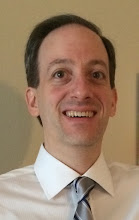
Remembering Eugene "Goo" Kennedy, 1949-2020
I was saddened to learn today that Eugene "Goo" Kennedy recently passed away. I first met Kennedy at the 2005 ABA Reunion, held in Denver during the NBA All-Star Weekend. Kennedy and several other ABA veterans immediately made me feel welcome after I introduced myself, and the time that I spent with them will forever be one of the highlights of my writing career. Players of his generation are around my parents' age, and those are the players who were in their primes when I was a child first learning about basketball. It is sobering to see an increasing number of people from that generation passing away.
Kennedy was not a star player in the professional ranks, but he starred at Texas Christian University, winning the team MVP and the Southwest Conference Player of the Year award for the 1970-71 season after averaging 20.4 ppg and 16.6 rpg while leading the squad to an NCAA Tournament berth.
Kennedy averaged 8.2 ppg and 5.6 rpg during his five year professional career, spending his first four seasons in the ABA before finishing his career with the Houston Rockets in 1976-77, the first season after the ABA-NBA merger.
His life--any life--adds up to so much more than just numbers or statistics or accolades. Kennedy spent his post-playing career devoted to education and to helping at-risk kids, and he also raised several foster kids with his wife Mary.
During the 2005 ABA Reunion, I did a one on one interview with Kennedy. I was working on several stories about the ABA and pro basketball history. Looking back through my interview archives, I realize that my interview with Kennedy has never been published, nor did the quotes from that interview appear in subsequent articles. Here is an excerpt from that February 18, 2005 interview:
Friedman: "I'm doing an article
about James Silas, who has that great nickname--'Captain Late.' What do you
remember about playing with him as a teammate? What made him so special as an
offensive player that people really didn't get to see in the NBA after the knee
injury?"
Kennedy: "I called him 'Si-Lee.' I
remember when he came in as a rookie. He was very quiet, wouldn't say
anything."
Friedman: "Really?"
Kennedy: "Yeah. He was very
quiet."
Friedman: "He seems talkative
now."
Kennedy: "Very quiet. We became
very close. We always talked with each other, even when we were with other
teams. He's just an all-around good guy."
Friedman: "There was camaraderie
in the ABA,
even if you were on different teams everyone seemed to really have an 'all for
one, one for all' mentality."
Kennedy:
"When Fatty [Roland 'Fatty' Taylor, organizer of the 2005 and 2006 ABA Reunions] started getting this (ABA Reunion) together, we said, 'All
right, let's get together.' We started talking to other people who Fatty
couldn't get in contact with, so we spread the word and it worked well."
Friedman: "What's your favorite
memory from your playing days?"
Kennedy: "My rookie year, first
coming in and seeing all these guys with gray hair--the veterans. "
Friedman: "You felt like you knew
you had a shot, that some of those older guys were on their way out--is that
what you were thinking?"
Kennedy: "No, no, no. I'm
thinking, 'What am I to do?' You know some of the guys that you meet because
you played with them in college, but you didn't know them that well. When I
first came in I knew Collis Jones. We were very close because we had played
against each other, he at Notre Dame and myself at Texas Christian
University. So we hit it
off very well and have been together ever since. When I came in he was the
number one draft choice [17th pick overall in the 1971 NBA Draft, selected by the Milwaukee Bucks]."
Friedman: "Collis was with the
Chaparrals?"
Kennedy: "With the Chaparrals and
in the NBA. He decided to come to Dallas.
It was tough, it wasn't easy."
Friedman: "What's your best memory
of Julius Erving, the best move that you saw him do? I know that everyone says
that his best moves aren't on tape, that they happened in the ABA and were not filmed."
Kennedy: "We all came in at the
same time. He was a rookie when I was a rookie. In the ABA, Doc went to a lot of cities that did not
televise the games nationally. They were only shown in that town. A lot of
people did not see him in his prime. They missed it all. He would come into
town and people did not know who Dr. J was. They missed a great
opportunity."
Friedman: "Also, he came out of a
small, unheralded schoo1."
Kennedy: "UMASS."
Friedman: "Right. He came from a
small school into a league that was, undeservedly, given second class status in
terms of television coverage."
Kennedy: "Right. The ABA was a great league
with great players. Look at after the league folded how many guys went into the
NBA from the ABA"
Friedman: "Many of the All-NBA
guys for the next several years--Erving, Thompson, Gervin, Moses, Maurice
Lucas--"
Kennedy: "Moses and I played together
at Utah in the ABA
and then we played together in Houston."
Friedman: "What did you think of
Moses when you first saw him come out of high school at about 210 pounds?"
Kennedy: "Skinny kid who had so
much ability."
Friedman: "You could see it even
when he was that young?"
Kennedy: "Yeah and everybody was
determined to beat up on him. You could beat up on him and it didn't make any
difference. Moses was a quick jumper. He could go down and go back up, go down
and go back up. For his size, he was unbelievable. He was young, but he could
play."
Friedman: "He developed some
offensive moves a little later on, but when you were roommates he was mainly
scoring off of offensive rebounds, right?"
Kennedy:
"Rebounds and put backs. Then he worked on his little turn around jump
shot and taking the ball to the basket. He was just a great all around player
and a good guy."
Friedman: "What do you remember of
Marvin Barnes, another guy who was a great offensive rebounder?"
Kennedy: "Speaking of Marvin, I
was just talking to him out there. We played together in St. Louis--Marvin
Barnes, Maurice Lucas, Joe Caldwell, Steve Jones, Fly Williams, Gus Gerard. We
had a really good team."
Friedman: "What do you remember of the 1975 ABA playoffs? The Nets were the defending
champions and had beaten you something like 13 straight times."
Kennedy: "They had beaten us, but
during that playoff we were on a roll. We had come together as a team."
Friedman: "What changed?"
Kennedy: "Everybody started to get
to know everybody. Everybody felt real comfortable about what was going on and
got to know the system. Everybody liked everybody. We had fun doing it."
Friedman: "For those first couple
years, Marvin was an incredible player. He was putting up 25 and 15."
Kennedy: "Marvin was a great
offensive rebounder, great defender. He could handle the ball, he could shoot
the ball--he could do it all. He had so much ability it was unbelievable."
Friedman: "Did you ever read the
book by (David) Halberstam, The Breaks of the Game? Steve Jones was
interviewed in that book and he talked about Marvin Barnes. That was the first
time I ever read about or heard about Marvin Barnes. That book came out a long
time ago, like 25 years ago--I read it as a kid."
Kennedy: "Marvin was the type of guy
who did what he wanted to do. He didn't think about what would happen. He just
did it and then thought about it afterwards. He's a fun guy, he's a neat guy.
He always wants to help somebody."
Friedman: "He has a good
heart."
Kennedy: "Good heart, good, tender
heart."
Friedman: "After you guys beat the
Nets, then you played the Colonels and that's when Freddie Lewis got injured,
right?"
Kennedy: "I think that it was an
old knee injury from when he played with Indiana. When he went down, he was our
main point guard. He was at the top of his game that year. He was scoring,
playing good 'D' and running the team. We had other good quality guards, but
when he went down it was not the same as having him out there."
Friedman: "I read about a guy you
had on the Spirits named Don Adams."
Kennedy: "Don Adams came in from Detroit."
Friedman: "I guess he was a
physical player and he frustrated Doc a little bit during the series. What do
you remember about that?"
Kennedy: "Well, what frustrated
Doc more than anything during that series was Marvin. Marvin was all over Doc.
When Marvin played he talked a lot of noise. He was constantly talking on the
court, (saying things) like, 'You can't stop me, you can't do this.’"
Friedman: "That was one of the
real shocking upsets in basketball history. I actually did an article a while back about some of the greatest upsets based on the difference in won/loss record. They were the defending champs, they had the better record and had
beaten you so many times in a row."
Kennedy was a soft-spoken man, and a fun interview subject. I am glad that I had the opportunity to speak with him about his ABA and NBA memories.
Rest in peace, "Goo."
Labels: 2005 ABA Reunion, ABA, Eugene "Goo" Kennedy, James Silas, Julius Erving, Marvin Barnes, Moses Malone, New York Nets, Spirits of St. Louis
posted by David Friedman @ 8:44 PM


We Are Family
Note: Sister Sledge's "We Are Family" was released a few years after the NBA-ABA merger, but it is the perfect theme song to represent how ABA players feel about each other. This article was originally published on March 2, 2005 at HoopsHype.com but the link no longer works, so I have reprinted the article in its entirety below.
Loyalty and togetherness.
These
unbreakable bonds connecting most ABA players were renewed and
strengthened throughout the "ABA Ol' School Reunion," which took place
in Denver during the 2005 NBA All-Star Weekend. The Reunion was organized by Fatty Taylor, who played seven years in the ABA, and his longtime friend James Render.
"I
got the idea for the Reunion because the NBA All-Star Game was coming
to Denver, Colorado, which is an ABA city," Taylor said. "So it is only
fitting to have a Reunion for all the ABA guys. I just decided to get
all the guys together in a spirit of fellowship. We figured that it is a
chance just to see each other again. There is no telling when your day
will come. It started off as a big party, but it turned into more than I
thought it would."
The ABA Reunion is not an "official" NBA All-Star Weekend event and this does not bother Taylor at all. "I
just thought that it was something that I really wanted to do--getting
in touch with guys who I haven't seen in years. They were happy and
wanted to see each other. See, the ABA players are a little different
from the NBA players. We had a close-knit league. The NBA tried to
destroy us and never wanted to see us make it. We played hard and we
tried hard (to not let that happen)."
Taylor would like to make the ABA Reunion an annual event. "This
is something that could be for us every year at the All-Star Game--an
ABA Reunion, having different festivities. Everybody likes each other
and we are happy to see each other. When we played against each other,
we went out there and played hard, but after the game we would go out
and party and have a good time. We just want to relive some of those
good times."
The festivities began on Thursday, February 17 when several ABA players--including Rick Darnell, Mike Davis, Willie Davis, Joe Hamilton, Eugene "Goo" Kennedy, Warren Jabali and James Silas--gathered at Denver's East High School to sign autographs and
reminisce. Riding in a yellow Hummer stretch limo to the school, the
players regaled each other with stories. Not surprisingly, Julius Erving featured prominently in several of them--both for his ABA exploits and for his summer-league displays.
Joe
Hamilton described a Dr. J move that was so otherworldly that Hamilton
fell off of the bench in amazement and was fined by his coach for not
keeping his mind on the game. Several players mentioned the Doctor
destroying Sidney Wicks in a summer-league game after Wicks had
proclaimed that he was going to shut down Erving. Asked about this
later, Erving remembered the incident, saying that it happened at the Willie Naulls game in Los Angeles.
Mike Davis described a Rucker League encounter when Connie Hawkins blocked Wilt Chamberlain's
patented fadeaway jumper, except that he was not satisfied to just
block it--he wiped the ball all over the backboard before sweeping in
the rebound. After that, Chamberlain discarded the fade away for that
evening and proceeded to dunk on everybody in sight.
Davis,
who lives in New York, got up at 4 a.m. and had to take a flight with a
Las Vegas connection to arrive in Denver. When the pilot said that the
plane was flying over Colorado, Davis felt like saying, "Hey, drop me
off here!" He was tired and hungry during the drive to East High School,
but would not have missed the ABA Reunion for the world. Signing
autographs and interacting with fans has a special meaning to Davis,
who explained that he'll never forget meeting a professional basketball
player for the first time when Carl Braun, the New York Knicks' star guard in the 1950s, spoke at the Boys and Girls Club that Davis went to as a child.
Many
of the fans at the East High School event had not even been born when
the ABA existed, but others had vivid memories of the league. One older
gentleman brought with him a program from the 1984 NBA All-Star Game,
which was held in McNichols Arena in Denver and featured several ex-ABA
players. When he seemed a bit reticent about asking for autographs,
Darnell came over, talked with him, asked him which players he was
looking for and made sure that he got the signatures he wanted.
Warren
Jabali is a very interesting figure. When it is suggested to him that
it is amazing that one year he averaged 10 rpg as a 6-2 guard/forward
going against much taller players, he says simply, "They couldn't jump."
There is no pretense to his comments and no extra words--he gets
straight to the point. Most of the ABA players are quick with a joke or a
comment, but Jabali is more reticent, perhaps because he feels that he
has been misquoted and misrepresented previously. He has a Jim
Brown-like presence--quiet, but strong and confident.
After
the appearance at East High School, which was covered by the local Fox
television affiliate in Denver, the players headed back to the
Doubletree Hotel for the Welcome Reception. While a DJ spun songs from
the 1970s, the ABA players renewed acquaintances and interacted with
fans who bought tickets for the event.
That night Hamilton told me about playing on the 1974-75 Kentucky Colonels team that won the ABA Championship. He recalls that when Coach Hubie Brown arrived, things changed. "We're
like, 'Hubie, come on, we're veterans.' We practiced like it was the
first day. It could be February the 15th and we've played 60 games.
We're still practicing like it's the first day, but that's Hubie. Hubie
knew every nook and cranny of this game. Any situation that would come
up, Hubie Brown had something for it. His knowledge of the game was just
so amazing."
Hamilton
indicated that Brown's encyclopedic understanding of basketball mirrors
the football wizardry of the New England Patriots' Bill Belichick. Hamilton knows something about football. He used to work as the Athletic Director for Louisville's youth programs and his son Joey III is an assistant coach at Male High School in Louisville, winners of three state football championships under the direction of Bob Redman (father of NFL quarterback Chris Redman).
On Friday, the players did more autograph signings. During the Reunion weekend, Lelands.com donated its expertise to coordinate in person signings by over 20 ABA players--including Hall of Famers Julius Erving, George Gervin and Moses Malone--of 300 basketballs and will sell the limited edition balls over the
next year, with some of the proceeds benefiting the Colorado Hawks,
Taylor's AAU team for fourth through twelfth graders.
Friday night's "Ol' School ABA Reunion Party" at Invesco Field featured a performance by India.Arie, daughter of five-time ABA All-Star Ralph Simpson.
She performed several of her hits, including "Video" and "Talk to Her,"
plus material from her new CD. Throughout the evening, video screens
showed montages of ABA highlights, which were provided by Arthur
Hundhausen, webmaster of the Remember the ABA website
ABA
players frequently point out that at the time of the merger, the NBA
needed what the ABA had: the best young players--like Erving, Gervin,
Malone, David Thompson and Artis Gilmore--and an
exciting, free-flowing game. Hundhausen's videos provided evidence of
this, showcasing a fun, fast-moving game featuring ball and player
movement, good shooting, dramatic dunks and devastating blocked shots.
It
is amazing that Gilmore, one of the great all-around centers in the
history of the game, is not in the Hall of Fame and is not even among
this year's finalists for the honor. Gilmore is stoic and resigned about
the mystifying snub, although he poignantly notes that induction would
have meant more to him if he had received it before the passing of his
mother within the last year.
Saturday was an open day for the players to rest and unwind. On Sunday
morning, hundreds of retired NBA and ABA players attended the NBA
Retired Players Association's annual brunch at the Hyatt Regency/Denver
Tech Center. Cedric the Entertainer served as emcee and several ABA players and coaches received awards--including Byron Beck (Original Denver Nugget), Larry Brown (Coach of the Year; he was unable to attend the ceremony), Spencer Haywood (Legend Award), Dan Issel (Founder Award), Doug Moe (Humanitarian Award) and David Thompson (Mr. Denver Nugget Award). Lafayette "Fat" Lever (Community Service Award) and Kiki Vandeweghe (Basketball Executive Award), who both played for the Nuggets in the NBA, were also recognized.
The ABA Reunion concluded Sunday evening with a gathering at the
Seawell Ballroom in the Denver Center of Performing Arts, just a few
blocks from the Pepsi Center. The ABA players joined fans to watch the
NBA All-Star Game on big screen TVs. After the game ended, the party was
just beginning, as the screens switched to Hundhausen's ABA highlight
video montages. The After Party lasted until past 1 am. Some retired NBA
players stopped by as well, including current Hall of Fame finalist Adrian Dantley.
Four-time All-ABA guard Mack Calvin
put the whole weekend into perspective: "I think that what is important
and special about this is that the ABA players--Doc and Gervin and all
the guys--have always been a unit. A lot of guys can think about doing
their own thing, but those guys have always been team guys. There has
always been some camaraderie. I think that this exemplifies the overall
attitude for over 30 years. The ABA guys are like a family. We had to
stick together in order to survive. It's all about seeing these guys and
talking about the old days."
Labels: 2005 ABA Reunion, Eugene "Goo" Kennedy, Fatty Taylor, George Gervin, James Silas, Joe Hamilton, Julius Erving, Mack Calvin, Mike Davis, Moses Malone, Rick Darnell, Warren Jabali, Willie Davis
posted by David Friedman @ 12:49 PM
Warren Jabali Biography Provides Insight About a Unique Athlete/Philosopher
Warren Jabali is one of the most interesting people I have ever interviewed. I had the privilege of both meeting him at the
2005 ABA Reunion and also speaking with him at length on the phone. Those conversations formed the basis for two articles:
Warren Jabali in his own Words and
Remembering Warren Jabali. I was honored and pleased when Mary Alice Beasley, Warren Jabali's widow, asked for my permission to reprint both of those pieces in
Thanks to You: Memories of Warren Edward Armstrong Jabali, her 415 page tribute to not just Warren Jabali the basketball player but--much more importantly--Warren Jabali the human being.
Here is a quote from the book's preface, written by David Thomas: "The men who gathered at Warren’s funeral felt one thing in common:
Warren’s story should be known. It is the story of the fearless young man with extraordinary gifts who discovers that life is unfair, that the world is out of balance, that there are monsters--both inner and outer--that must be slain. It is the story of coming to terms with life
as it is, facing facts squarely, and then turning your gifts, whatever they are, to the benefit of those you care about most. It is a love story, perhaps above all, a love story."
Thomas recalls a conversation in which Jabali expressed his support for Booker T. Washington's philosophy--"Put down your bucket where you are"--as opposed to W.E.B. DuBois' approach of "We have to get equal rights and participate in the system." Jabali elaborated, "(Since black people) don't have the power and influence that equals our abilities, then you would say that the Booker T. model is the model that we should have been following." One could call it the art of the possible; instead of waiting or hoping for the ideal world situation to develop, create the best opportunities for yourself and your people by using whatever resources are available to you right now.
In the Introduction, Beasley notes, "Although Warren Edward Armstrong Jabali was known for his
basketball skills and accomplishments in high school, college and in the American Basketball Association (ABA) 1968-1976, little is written of his personal life or career as an educator. The purpose of this book is: to inform readers of his many positive attributes; to reveal multiple aspects of his personality; to describe his commitment to a cause he deemed worthy; to familiarize readers with his passion for music; to make known his talents as a writer and speaker; to demonstrate his intellectual depth and keen perception; to convey his love and to express his devotion for his children; to unveil his spiritual growth; and to chronicle his social evolution."
Warren Jabali completed 22 typewritten, single-spaced pages of his autobiography before he passed away on July 13, 2012.
Thanks to You includes those pages but the bulk of the book consists of the memories and observations of those who knew Jabali best, supplemented by various speeches and articles composed by Jabali. Beasley declares, "His writing style, as was his speech, is direct and very powerful," an opinion with which any reader of this book will readily concur.
Jabali studied a wide variety of religions and philosophical doctrines. Beasley writes (italics are used in the original text), "It was his goal to reach a state of 'Holy Indifference" (
having a balanced understanding of life while being unaffected by events and circumstances) as described in the Bhagavad Gita, the Hindu scriptures. In other words, as Jabali would often say: 'It is what it is.'" It is important, but not easy, to accept the concept that
Only Thoughts and Actions Can be Controlled, Not Outcomes.
In the autobiographical section of the book, Jabali humbly declares, "I do not consider myself to have been a great player and therefore did not generate enough notoriety as to deserve to be written about in a book. Elgin Baylor, Oscar Robertson, Bill Russell and Wilt Chamberlain are the type of players who deserve basketball books. From my era, players such as Kareem Abdul-Jabbar, who was dominant in high school, college and professionally, Julius Erving, who was the star of the American Basketball Association, and George Gervin, who was a master of scoring and of the 'finger roll,' would be deserving of literary attention. These men were transcendent and actually have legendary accomplishments. If one is not of that ilk, his basketball story must then be ordinary. I will make mention of my basketball experiences here and there but I will write primarily about the opportunity and perspective gained from the exposure gained by working as an above average athlete."
Keep in mind that Jabali made the
ABA's All-Time Team, earned four All-Star selections, won the 1973 ABA All-Star MVP award and is the only player in ABA/NBA history other than Magic Johnson to win the Rookie of the Year and the Finals MVP in the same season; he was hardly an "ordinary" player but he possessed the extraordinary awareness that he could and should make a larger contribution to society than just putting the ball in the basket with great aplomb.
After describing his family's background, history and struggles, Jabali comments on how he feels like the black community has fallen short compared to other minority groups:
We have failed to take lessons from other immigrant groups. Nor do we seem to take the biblical examples to heart. How was it that the Jews could be enslaved by the Egyptians for four hundred years and maintained their religion, their language and their national identity? When the Jews were emancipated and were free to leave the plantation, they sought to go straight back to Israel. African Americans, when freed, sought only to go to northern cities.
When Marcus Garvey talked of going back to Africa, the response was in reality tepid. I submit that the African American 'Moses,' Booker T. Washington, was cast in the wrong light and dismissed to the shame and detriment to us as a people. Booker T. Washington admonished black people to be productive. The Jews, if nothing else, have been productive...Did our ministers try to teach us why the Jews were successful wherever they went?
Later in the book, Beasley (who Jabali nicknamed "Bibi") comments about Jabali's fascination with Jewish history:
The history of the Jews intrigued him most. He would often state, "Bibi, the Jews are so successful because they are one universally. Their religion binds them no matter where they are. Neither regionalism, nationalism, political affiliation nor anything else trumps their religion. We should follow their example. Religion divides us, education divides us, skin color divides us, etc...we need to unite."
Beasley notes that Jabali's favorite poems included "Desiderata," "Invictus," "Myself," "The Raven" and "Annabel Lee." The concluding stanza of "Invictus" challenges the reader to not succumb to fate but rather to rise above any challenge/obstacle:
It matters not how strait the gate,
How charged with punishments the scroll,
I am the master of my fate:
I am the captain of my soul.
The concluding lines of "Desiderata" are also uplifting:
With all its sham, drudgery and broken dreams, it is still a beautiful world.
Be cheerful. Strive to be happy.
Those two poems convey much of the essence of Jabali's world view; he was a strong man who controlled his own fate but he also learned to appreciate the beauty in our flawed world and he strove to be happy while never abandoning his goal to improve his life and the lives of his people.
Jabali loved a wide variety of musical genres. On July 15, 1996, he wrote a note to Beasley containing the lyrics from a song called "Thanks to You":
You changed my life and my way of doing things
And all of my life Baby, I will be giving
Thanks to you for being true
And loving me as I love you
You took my heart and you possessed my soul
In you I find warmth when so called friends turn cold.
Forevermore when things get tough
Then we'll have each other. I believe...
I really do believe that that's enough.
You changed my life...You changed my life...
That was the last song that Jabali and Beasley listened to together and that message so profoundly touched Beasley that she used the song title in the title of her book.
David Thomas is right on two counts: Jabali's story should be known and, at its core, it is a love story, a story about how love influenced Jabali's personal evolution and about how Jabali's love for his people directed his actions so that he could make a significant positive impact in the lives of many individuals who were fortunate to cross paths with him.
----------
Thanks to You: Memories of Warren Edward Armstrong Jabali can be ordered
here.
Labels: 2005 ABA Reunion, ABA, David Thomas, Mary Alice Beasley, Oakland Oaks, Warren Jabali
posted by David Friedman @ 4:28 AM
Remembering Warren Jabali
"It's absolutely the most meaningful moment of my career, to be able to get up here and make this presentation."--Pete Vecsey, introducing the 2013 NBA Legends Brunch "In Memoriam" tribute to basketball legends who passed away in 2012
Warren Jabali averaged 17.1 ppg, 6.7 rpg and 5.3 apg during a seven season ABA career. He won the 1969 Rookie of the Year award and then he captured the 1969 Playoff MVP by producing 28.8 ppg and 12.9 rpg while leading the Oakland Oaks to the ABA title. Jabali earned the 1973 ABA All-Star MVP--while competing against a team that featured future Hall of Famers Billy Cunningham, Julius Erving, Artis Gilmore and Dan Issel--and he made the 1973 All-ABA First Team. Those statistics and honors are impressive but they only scratch the surface in terms of Jabali's playing abilities--and they provide no insight whatsoever about the qualities that made him a special person.
Jabali passed away on July 13, 2012 at the age of 65; as far as I know, ESPN, NBA.com, TNT and other major media outlets that cover pro basketball offered no tribute to Jabali, nor did media outlets in the Bay Area--where Jabali was the best player on a championship team--mention Jabali's death. As soon as I saw Jabali's name and picture during the Legends Brunch telecast I knew that I had the responsibility to raise awareness about Jabali's life.
Jabali--who was originally known as Warren Armstrong
before adopting the name Jabali, which is Swahili for a large, conspicuous rock--was an eloquent speaker and writer. His essay "Greatest High School Athlete: A Reprise"--which can be found in its entirety
here--is a thoughtful examination not just of Jabali's life but of issues such as racism and the responsibility to use one's talents for the greater good of society. Jabali writes, "The key to greatness in my opinion is the ability to freely express one's gift. One's talent must flow as a direct and uninhibited stream which seeks and finds its own level. Things which inhibit the free flow of talent are not being coachable, not maintaining optimum conditioning, a lack of leadership skills and selfishness." Later in the essay, he expresses heartfelt concern about a lack of progress in his own community:
It is paradoxical that in spite of the spectacular achievements of African Americans, the race as a whole is actually worse off than it was 34 years ago when I left Kansas City. For example, in 1964, a significant percentage of the African American population lived below the poverty line, were unemployed, under-educated and segregated. In 1998, there are still significant percentages of impoverished, unemployed, under-educated and segregated African Americans. 1998 is worse than 1964 because in 1964 we had more stable neighborhoods, we had a movement and we had hope. We had an agreed upon enemy, which we identified as racism and we had clear purpose in mind. In 1998 we have an expanding underclass, drug and crime infested neighborhoods, mounting numbers of out
of wedlock children being born to teenagers, an appalling lack of interest in education in light of the monumental struggles and disillusionment in the ranks of upwardly mobile African Americans. In 1964, the music, always an accurate reflection of culture, promoted unity and struggle. Curtis Mayfield sang "Keep
On Pushing" and "We're a Winner." James Brown sang "I'm Black and I'm Proud." In 1998, Ice Cube represents by singing "Today Was a Good Day, I Didn't Even Have To Use My AK."
Jabali's 2004 essay
"Those Who Carried Us Away Captive, Required of Us a Song…Those Who Wasted Us Required of Us Mirth" is a brilliant examination of the racial dynamics and tensions that existed in the 1960s--and still exist today, albeit in less blatant forms. Here is a brief quote from that piece: "I did not maintain a belief that white people possessed any attributes or capacities which were inferior to mine. I did and do maintain that white people exhibited behaviors toward black people which were despicable and disgraceful. Since it was impossible for me to know whether a white person was harboring such attitudes and behaviors, I chose to cast a wary eye toward all. As far as I am concerned, given my knowledge and background, this was the prudent thing to have done. Conversely, the socially acceptable thing to do, according to some, was for me to continue in the vein of proving to white people that we were their equal. I saw that as placing blind faith in the hands of strangers. A passage from the Bible illustrates the dilemma faced by those of us who began the process of integrating the professions: 'Those who carried us away captive, required of us a song; those who wasted us, required of us mirth.'"
Stop reading this tribute for a minute and click on that link to read the complete essay. Seriously--stop right here, go back and read Jabali's essay. You may have heard Jabali described in derogatory terms by certain writers: compare those descriptions with the man's own words and form your own judgment instead of enslaving your mind by letting others do your thinking for you.
Jabali spent the latter part of his life working in the Miami area as an elementary school teacher and youth counselor; he did not pursue high school coaching opportunities because he felt he could have the most impact by interacting with younger, more impressionable students. It should be clear from reading his words that Jabali had a very thoughtful and mature outlook that could help guide a young person down the right path.
*********************************************
I have covered six NBA All-Star Weekends but nothing has topped--or ever will top--the first one when I had the joy and privilege of not just reporting from the official NBA events but also writing about
the ABA Reunion; ABA players Rick Darnell, Mike Davis, Willie Davis, Joe Hamilton, Eugene "Goo" Kennedy, Warren Jabali and James Silas--none of whom I had ever met before--instantly treated me like a trusted friend and enthusiastically shared with me stories about their playing careers. Jabali was known as an intimidating player but we developed a good rapport, which led to the opportunity to do a phone interview with him after All-Star Weekend. That wide-ranging interview not only formed the basis for the article
Warren Jabali in His Own Words but it also provided excellent quotes that I used in other articles, including
Classic Confrontation: Wilt Versus Shaq and
Julius Erving's Playoff Career, Part I: Yes, Virginia, There is a Man Who Can Fly. Jabali impressed me not just with his intelligence but also with the way that he completely took responsibility for his actions in the infamous Jim Jarvis incident: "That was an example that I offer no defense for; I mean that is something that I shouldn't have done." Jabali did not offer a lame excuse for attacking Jarvis or say that he was sorry if anyone was offended; Jabali flat out said that he was wrong and there was "no defense" for what he did. That kind of accountability is a rare character trait.
Although I have used various quotes from my Jabali interview, most of the interview has never been published--until now. Here is my April 16, 2005 conversation with Warren Jabali, lightly edited for clarity and published in this form for the first time as an enduring tribute to a life well-lived:
Friedman: "What stands out in your mind most from your ABA career?"
Jabali: "The thing that probably stands out the most for me is the recognition and realization that I could play. That happened in the first training camp. (Coach) Alex Hannum already knew pretty much who he wanted to start. He would split Rick (Barry) and I up--I would be on one squad and Rick would be on the other squad. We would win our share of the scrimmages. Then he would put all of us together--Larry (Brown), Doug (Moe), Rick and I on the same squad--and of course we would dominate. What began to become clear was that there was nobody in the practice, save Rick, who was performing any better than I was at that point. Subsequently, going through the beginning of the season--after going through the cycle once and seeing everybody--it became clear that I could actually play the game. That was a high point."
Friedman: "When you talk about this realization that you could play, was that something that you doubted coming to camp, or do you mean more that other people now realized that you could play at that level?"
Jabali: "No, I'm talking about my own perception. It wasn't so much that I doubted it--it was the fact that I had never really even thought about it. If you talk to players who are my age--58, 60 years old--and up, a lot of us didn't come out of environments where next year or five years from now was something that you thought of and planned about. My upbringing was one in which my expectation was to graduate from high school and get a job in one of the factories around Kansas City and get out of the house. I was the oldest of 11 children. College came as--not a surprise--but it wasn't part of any plan that I had. I played four years of college ball without the expectation or plan to go into professional basketball. Professional basketball to me was exemplified by people like Chamberlain and Oscar Robertson and Elgin Baylor and Jerry West. I didn't think that I could compete with those kinds of people. I didn't perceive professional basketball to be (about) the sixth, seventh and eighth men and I didn't compare myself to them. Had I made some kind of comparison with them maybe I would have figured, 'Yeah, I can play the game.' But I didn't take them into consideration. I only took people like Oscar and those kinds of players into consideration, so therefore that was my apprehension--playing against people like that."
Friedman: "That's so interesting because today--and for the past 10, 15, 20, 25 years--so many young people from a very early age are focused on the idea of becoming either a professional basketball player or just a professional athlete in general, to the exclusion of other goals or other thought processes. You are someone who achieved that goal but you are saying that it's not something that you really set out to do far in advance of achieving it; it's something that just developed--you played in high school, which enabled you to play in college, then you played well in college and then that gave you an opportunity to go to a professional camp. You went to the camp and did well and the situation just kind of evolved. It wasn't a situation where you sat down as a child or as a young person and said, 'I'm going to be a pro basketball player,' like so many people do today or try to do today."
Jabali: "Well, I'm not certain at all that that's really that uncommon, if you ask people my age. Certainly, the players I mentioned who end up being very, very good, like Oscar Robertson or Jerry West or Walt Frazier, those kind of people probably knew very early on (that they would play pro basketball). I'm probably a mid-level professional basketball player; I'm certainly not a great basketball player like those people were, so their greatness probably was so obvious to everyone that conversations with them revolved around college and professional play. People who are my age who were just playing the game--I don't think that most of them had the aspiration or the specific goal to enter into the NBA. I don't think that that was part of the scheme back then. But of course now you have a different situation. The information is the key. If we were to go backwards we would see that college basketball was not as big in the 1960s as it is now and of course professional basketball has gone worldwide. People began to have expectations to go to college; I didn't even have the expectation to go to college. So today parents are telling their kids these things. Parents are preparing their kids and parents are putting these young people in AAU leagues and into tennis and into golf. Therefore, expectations are coming not so much from the mind of the child as they are from the mind of the parent."
Friedman: "The point that you brought up that you don't consider yourself a great player but what you call a mid-level player is interesting, because it leads straight into my second question or one aspect of that question: looking at your career from a statistical standpoint, in various seasons you ranked in the top ten in the ABA in scoring, assists, free throws made, three point field goals, minutes, three point percentage--a wide range of categories. You had a very diverse game in terms of where you ranked among the top players in individual seasons. In researching some things that you wrote, I found a quote that I want to read back to you and then ask you some questions about. In a letter that you wrote to the
Kansas City Star you said, 'My own opinion on the subject is that I became a good player and not a great player. Factors for not being better were injuries to my knees and back. Another factor was that I never considered sports as a higher priority than the struggle of African-American people to gain standing in the human community.' I have several questions about this issue of greatness and your perception of professional basketball. First, do you believe that you ever reached greatness as a player at some point in time but because of the injuries and these other factors you were not able to sustain it or do you not feel that you truly reached a level of greatness as a player?"
Jabali: "The only thing that I would add to the quote by way of explanation would simply be that no that I did not reach greatness. Again, the people that are great are the ones that I talked about--Oscar, Jerry West, Elgin Baylor. It is possible that had I grown up in a different situation maybe I could have competed to the point that I would have penetrated the upper level of these rankings. I was talking to Connie Hawkins and Spencer Haywood about this at the All-Star Game. We were sitting around the bar and talking and telling lies (
Jabali chuckles). Then it gets serious. I said that I think that it's a matter of growing up in New York or, as Spencer did, growing up in Detroit, where there are just hundreds of really outstanding basketball players who never made it. They grew up playing against these people. Because what happened is that I just basically had a straightforward power game as a guard, which was the thing that made me outstanding. I could do things that people my height simply could not do. But it didn't get expressive and it wasn't creative. The reason why it wasn't expressive and creative was because it didn't have to be. The people who I played against in Kansas City I was able to dominate with just A, B and C. I didn't have to go to X, Y and Z. When I started playing in the ABA, I remember a play--and I talked to Spencer about it--when my teammate was shooting a free throw. That put the opposition, which was Spencer, who was playing for Denver, under the basket. I was in the middle and then there was another Denver player next to me. My teammate shot the free throw and it came high over Spencer's head. I went up and grabbed the rebound. We were both on the floor. I'm jumping and getting ready to try to dunk the ball into the basket, but as I looked for the basket it was blocked out. All I could see was Spencer's belt buckle. The whole basket and the backboard--everything was gone and I couldn't see anything. So I moved the ball to my left hand, reached around Spencer's waist and spun the ball off the backboard and into the basket. I never would have thought to do anything like that. But because I had to do something other than just come down with the ball and get called for traveling or just throw the ball up and have Spencer smack the ball into the stands, I was forced to become creative and do something that I otherwise would not have done. So competition can hone greatness and develop great people. If you're not playing against great people then I don't see how you really can become great. You can become great at one particular thing. Bill Bradley grew up in Crystal City, Missouri and became a great jump shooter. That's basically all he did--ran off of screens and shot jumpers. If you want to become a great shooter, you can do that by yourself. Then again, his father owned a bank or was a bank president, so he probably went around the country and went to clinics and camps. I really don't know. But the point is that I did not have the kind of environment to grow up and become a great pro--Lucius Allen and I were from Kansas City and we played on the schoolyards together once. He was from one side of the bridge and I was from the other side of the bridge. And even that time, we played with each other. So there was not the kind of competition that just compelled you to keep working on your game and adding new things to it. So I think that the environment that I grew up in is really a part of why I never entered into the upper echelons."
Friedman: "You mentioned the names of some great players--Spencer Haywood, Connie Hawkins--and then some of the NBA players from the 1960s, Wilt and Oscar Robertson. Who do you consider to be the greatest players that you played against or who were your teammates?"
Jabali: "Oscar is certainly the greatest player who ever played. They want to give that to Jordan, but Jordan really did not have to play against the same type of players. If somebody were to really study it--and I'm talking off the top of my head, so maybe statistically people can refute this--when Magic left, who were the great players? I think Karl Malone was the greatest player still circulating around when Jordan was doing all those things. Who was Jordan playing against?"
Friedman: "I would say that the player who excelled the most during the year and a half that Jordan retired (to play baseball) was Hakeem Olajuwon. He won an MVP and two championships."
Jabali: "Who was playing besides Olajuwon and Karl Malone?"
Friedman: "David Robinson also won an MVP during that period."
Jabali: "David Robinson really wasn't--to me--a great player. He had great potential, but he didn't want to hurt anybody (
Jabali laughs)."
Friedman: "I agree with you, but you were asking who the other players were at that time--"
Jabali: "He wasn't great to me."
Friedman: "No, I understand what you're saying and I think that when Olajuwon torched him in the playoff series the year that Robinson won the MVP it kind of proved the point that you're making. I agree with you. I see your point (about the players Jordan played against). The other player who won an MVP during the Jordan era--other than Jordan--was Charles Barkley."
Jabali: "You do not compare Barkley to Chamberlain, to Nate Thurmond, to Gus Johnson. I mean you've got some people who Oscar was playing against who were just tremendous. There were not a lot of great teams, but you had some teams that were nip and tuck in terms of every year you knew that they were going to be in competition, like the Lakers and Jerry West, Chamberlain and wherever he happened to be, Oscar Robertson and wherever he happened to be. If you go back you can probably put together some serious, serious teams that Oscar had to play against. Add to that the fact that Oscar's management--the Cincinnati ownership and management--were not really putting together the squad in the way that they should have been. I think that one year they had a real good squad with Jerry Lucas and Wayne Embry. They had what they needed to have and they just didn't win it because they were up against the Celtics."
Friedman: "Sure. They also had to deal with the tragedy that happened to Maurice Stokes."
Jabali: "Anyway, what I'm saying is that Michael Jordan is a great player, but I always look at it from the point of view of impact on the game. If you look at impact on the game and you have someone who is capable of averaging a triple double for the entire year, then you have a tremendous, great player. Michael Jordan was great because he was clutch. Jerry West also has that reputation. Michael Jordan happened to be in those situations. I don't think that anybody will ever be able to be compared to Michael Jordan unless they happen to be in those situations. I think LeBron James is going to be unable--the way that it looks now--to actually be compared to Michael Jordan because (the question is) what do you do in championship situations? Michael Jordan was in so many championship situations and came through, that, unless you are doing that, how can you compare? It's just like what we are talking about in terms of comparing Oscar Robertson to Michael Jordan. You have to use the standard that most people use--how many championships did he win? Well, I wouldn't do it like that. The person who is right behind Oscar as far as I am concerned is Walt Frazier. Walt Frazier had an equal impact on the game offensively and defensively. Nobody did that. Walt Frazier is the one who made me realize that I was never in condition to play the game. This man would play just as hard on the defensive end as he would play on the offensive end and would beat you either way."
Friedman: "When you're saying that Walt Frazier is right behind Oscar Robertson are you saying that you would place him ahead of Michael Jordan?"
Jabali: "In terms of what I'm talking about. I mean, in terms of excitement and being a clutch player, you have to rate Michael Jordan as the best. But if we are talking about impact on the actual game, Michael had a team built around him where he was able to delegate. He came up with a good term, 'step up'--'You're going to have to step up.' So his boys stepped up and made critical shots when they were supposed to. They would get rebounds--Rodman. They would make passes when they were supposed to because of his urging. Then when push came to shove and crunch time came, he would make the basket. But what if he had to do what Oscar had to do? Oscar had to make the shot, Oscar had to make the pass, Oscar had to get the rebound, Oscar had to play defense--Oscar had to do all of these things himself. So, if you look at it from the point of view of impact on the game, I'm saying that I would take those two people before Jordan."
Friedman: "So where would you place Jordan? Would you place Jordan third by the criteria that you are using?"
Jabali: "Yeah, because he had tremendous impact on the game. He didn't deal with it from the point of view of defense, even though they gave him defensive all-star status--beating people up was what he was really doing. Like on that last shot in Utah--he pushed the boy off and then he shot. But he still made the shot. So what can you say? You gave him the shot and he put it in. It was still a pressure packed shot. I'm not trying to degrade Michael Jordan at all. I'm just looking at it from my point of view: if you are talking about basketball, and you talk about somebody playing the game, are you talking about how many championships they won and how many games they won or are you talking about what they actually accomplished on the floor?"
Friedman: "I understand what you are saying, absolutely."
Jabali: "The same thing goes on with Chamberlain and Russell. Because Russell won all the championships he is supposed to be the greatest player. Well, he's not the greatest player. Chamberlain was the greatest player. You take that team away from Russell and let Russell play with some mediocre players, what is Russell going to do? If you put Chamberlain and Russell with the same mediocre players, Chamberlain's team would win more games. So if you use winning games and championships as the measure, I don't think that you get an accurate picture of what true greatness is."
Friedman: "Since you brought up Chamberlain and you mentioned Robertson, if you had to pick one player, if you were building a team and could take either player in his prime, who would you pick? Would you take Robertson over Chamberlain because of his versatility?"
Jabali: "No, because I think what you have to realize is that at the end of the game you need to be close to the basket. I think that size has proven time and time again to be the thing that wins championships. At the end of the game players get tired. Anyway, that's my point of view. It might be a little biased because of the time that I came up in. I think that there are two different things; Rick Barry used to argue that in All-Star Games there should be a Most Valuable Player and there should be a Most Outstanding Player. I think that Michael Jordan is the most outstanding player that has ever played, but that Oscar Robertson in his prime was the best basketball player."
Friedman: "In terms of those two categories, where would Wilt fit? I follow what you are saying with Jordan and Robertson, but in terms of 'valuable' or 'outstanding,' where does Wilt fit in to that? Or are you saying that Wilt is the 'most dominant'?"
Jabali: "Yeah, you could add another one (category). If you think in terms of the skills that are required to play the game of basketball--that's the best way for me to break it down--Oscar had mastery over all of the skills. I don't know of any skill that Oscar didn't have."
Friedman: "He was basically flawless as a player--he had no weaknesses. He could shoot, rebound, defend, everything."
Jabali: "Even though I said that he is the best player, you are asking why I would take Chamberlain first. The reason that I said that I would take Chamberlain first is because you have to start in the middle. If that's a contradiction, then I would say Chamberlain, Oscar, Frazier and then Jordan."
Friedman: "I don't think that it's a contradiction. I'm just trying to clarify and understand what you are saying. I have a couple follow up questions. One, a comparison that interests me is between Wilt Chamberlain in his prime and Shaquille O'Neal. I have a feeling that I know which way you will go, but I am interested to hear your reasoning."
Jabali: "There's no comparison. Chamberlain is head and shoulders above Shaquille O'Neal. Who I like to compare Shaquille O'Neal with is Darryl Dawkins. See what happens with Shaquille O'Neal is he is able to push people out of the way, step on them and dunk the ball. If Darryl Dawkins had been able to do what Shaquille O'Neal is able to do on the low post, Darryl Dawkins would have been unstoppable. Not only could he dunk as hard and forcefully as Shaquille O'Neal can, he had a 15 foot jump shot to go with all of that. He probably fouled out more than anybody in the history of the NBA. They did not allow Darryl Dawkins to play basketball. They controlled his game so much that when he went out on the court it was like he was walking on egg shells."
Friedman: "That's a very good observation because Dawkins always led the league in fouls and disqualifications. You're right, whether it's the game that is now being officiated differently or just those two players, it's a very different situation."
Jabali: "In order for us to even include Shaquille O'Neal in the conversation (about Wilt), you would have to imagine Shaquille O'Neal not being able to just knock people down and dunk the basketball. That means that he would have to have the ability to consistently make a five or ten foot jump shot or hook. If that was what he had to do, then he would not be as dominant as he has been being able to play the other way. So he could not compare to Chamberlain because Chamberlain had the strength to play that way but he didn't do it that way. He had a little fade away 10 foot jump shot, finger rolls and all that kind of stuff."
Friedman: "Chamberlain had a great finesse game and of course he was a track star, so he had some abilities and some dimensions to his game that would not be seen in Shaquille's game."
Jabali: "Yeah. I am not a real Shaquille O'Neal fan. I'm not opposed to him, but I don't like the fact that he is being set up to be one of the greatest centers of all time. Because they allow him to do things that other people are not allowed to do. I mean, if you see guards running down to the low post to post up their man, they are not allowed to do what Shaquille O'Neal is allowed to do. They don't even try to do that. Why is he allowed to do this? He is allowed to do this because the NBA has made a decision that that's what the fans want to see. If you ever get one of those current referees to be honest about it, they'll tell you that they have meetings in which they watch films on what they are doing and where they determine how aggressive they are going to allow Shaquille O'Neal to be. That's OK. But then those people who talk about and write about these things should take that into consideration."
Friedman: "I want to ask you about a particular aspect of greatness and this goes back to a conversation that we had in the car when we were riding around in Denver. You talked about court vision and the nature of it and which players have it and which ones don't. I was struck by the fact that you had a very low opinion of Allen Iverson's court vision. I would like you to expound a little bit on what you mean by court vision--what does it mean to have that and how is that developed. Also, Iverson has had some games with 14 or 16 assists--at least on the surface he appears to be capable of distributing the ball. I'm interested in your observations about court vision in general and then expound a little bit about whether you see it in Iverson's game or if he lacks it in some way."
Jabali: "Actually, he has it. He has court vision but what he does is not use it all the time. I remember when he was playing at Georgetown and played with Victor Page and he did not utilize him at all. Page would be standing wide open sometimes and Iverson would take the ball to the hoop with some kind of degree of difficulty shot. I'm sure that he saw Page standing there but he decided that he would do it another way. Therefore it is not that he does not have court vision, but he does not use it all the time in a constructive way because he feels that he must do it himself. I think that Jordan probably had the same problem when he first started but eventually Jordan figured out that he was not going to win a championship until he had some people who could accomplish certain things. Maybe if Allen Iverson had the kind of team built around him that could produce in certain situations then he would use them more. I think they made mention that he has confidence in the young guy who shoots three pointers (Kyle Korver) and that he looks for him. He looks for Webber now but he doesn't have confidence in Webber."
Friedman: "Webber doesn't seem to have confidence in Webber sometimes, maybe because of the injuries."
Jabali: "The point that I am making is that Iverson would probably keep the ball even though he sees Webber, so that's what I'm talking about. In the past Iverson has not distributed the ball--not because he doesn't see his teammates, but because he thinks that it would be better for him to keep the ball."
Friedman: "Is court vision a skill that can be developed?"
Jabali: "I don't think so. I really don't think so. I think that it's something that you either have or you don't have. My grandson has it. But another young boy that I coach doesn't have it, doesn't even think about where the open person might be. It's a mindset that you come to the game with. If you don't have it you are not going to develop it because you are going to be a split second too late; you will be looking for it rather than already seeing it. "
Friedman: "That's a very eloquent way to put it. In other words, if you don't have that skill and you are trying to do it, it still won't work. When you try to do it you have already missed the moment--the moment passed and the guy is no longer open."
Jabali: "Yeah."
Friedman: "Who do you think in today's game would be the best example of having that kind of court vision, having the instinct for finding the open man?"
Jabali: "Obviously it's LeBron right now. He sees everything--and Carmelo doesn't."
Friedman: "They're classic opposites. Carmelo's a scorer. The only thing he sees is the hoop."
Jabali: "Right. But he has dribbling skills, he has passing skills--he has all of the skills. His ball handling skills are sufficient. It's just the mindset (that is lacking).
Friedman: "I'll throw a couple other names out there--Jason Kidd and Steve Nash."
Jabali: "Yeah, both of them have it."
Friedman: "We've talked a lot about greatness in general, which is a fascinating subject to me, but now I want to talk about some specific moments from your career. In the 1969 ABA Finals you averaged over 33 ppg playing against the Pacers, who became the most storied ABA franchise and won the most ABA championships. What are your memories of that series?"
Jabali: "I remember it as a great basketball series. During that series I realized and understood that Indianapolis was the best town that the ABA had to offer. The fans were knowledgeable about the game. Going to Indianapolis was like going to Madison Square Garden in New York in the NBA. You put on your best game. They always had a good team, so they were always ready for most teams. Playing against Roger Brown and Freddie Lewis was extremely difficult. They had scoring coming from everywhere. But to be perfectly honest, I was unconscious. (Coach) Alex Hannum obviously knew what buttons to push. During the regular year I did not get the ball as much as I got it during the championship series. I was the second or third option. When Rick (Barry) was there, I was getting my scoring from offensive rebounds, fast breaks and steals."
Friedman: "Why did that change in the Finals?"
Jabali: "Rick was gone (due to injury)."
Friedman: "I know that, but you said that you went from third or fourth or whatever to the clear number one, averaging over 30 ppg."
Jabali: "I was the best player. Rick was a player who could handle and distribute. Rick could score but Rick could also handle and distribute the basketball. Doug Moe could not handle and distribute the basketball. Doug Moe was a scorer and he would not get other people involved. So Hannum clearly recognized that I needed to have the ball because not only could I score I would get other people involved."
Friedman: "A couple years later you spent a season with the Pacers. You played against them in the Finals and beat them and then later on you spent one season with the team. What are your memories of that season, specifically your memories of being coached by Slick Leonard and then your memories of playing with Mel Daniels, Roger Brown and Freddie Lewis?
Jabali: "That was a wasted year. First of all, what Slick did was keep his nucleus together and then just add different flavors on top of it. The year that I was there I was supposed to have been in Kentucky to become part of the machine that Mike Storen put together down there. I was supposed to help out Artis Gilmore and Dan Issel and (Louie) Dampier, because he was not a real point guard, he was a "2." He was a scorer actually; he got a lot of assists because he had the ball all the time. Anyway, I had some difficulty with the coach down there and before the season started they shipped me off to Indianapolis. We had four guards--Freddie (Lewis), me and Billy Keller, who should have been playing--but then you had Rick Mount, who had to play. All of our time was reduced by the fact that Rick Mount had to get some time, which he didn't deserve."
Friedman: "Did he have to play because he was a local hero?"
Jabali: "Yeah--but he couldn't play. He shouldn't have gotten any time, but Slick couldn't just sit him down because he would cry. Sometimes he wouldn't even come to the game--big baby. Anyway, that year ended up with me playing much more limited time than I was used to or should have been playing and I really felt underutilized. I was underutilized and didn't enjoy that year. I enjoyed being around Mel and Roger and Freddie and I loved Indianapolis but as far as playing was concerned it was just a wasted year."
Friedman: "I noticed that your scoring and your minutes and all of your stats were down that year and I wasn't sure if there was a minutes crunch or if that was when some of your injuries came into play--"
Jabali: "No, that was because he had three guards who could play--Billy Keller could play and of course Freddie Lewis could play and then I could play--but then you had to deal with that political thing with Rick Mount and all of our minutes got impacted. Anyway, Freddie was his (Slick's) man; Freddie was going to be in during crunch time. I was usually the person who did that for whatever team I was on and (in Indiana) that role was taken. I considered that year to be time not well spent."
Friedman: "The way that you're describing the situation reminds me a little bit of the team that Portland had a few years back, the deep team that made the run to the Western Conference Finals; in a sense that team almost had too much talent. You're talking about how you were usually the guy who had the ball at the end of the game but he already had Freddie Lewis to do that. It seemed like Portland had that same kind of team about four or five years ago when they lost to the Lakers. They had so many guys who could all do the same things that you couldn't put them all on the court at the same time; they had excess talent instead of having talent that did different, complementary things. Obviously, you can't have two clutch guards on the court at the same time handling the ball because there is only one ball. So one is going to play and one is not."
Jabali: "That is not exactly synonymous because there was no animosity among the three that could play. The animosity was there because you had one guy who couldn't. In Portland, you're describing that they had people who could play so the time was not available and the animosity may have come from that."
Friedman: "I was thinking specifically of the example you cited involving you and Freddie Lewis--both players who do similar things in clutch time. That particular situation reminds me of Portland. Portland had a bunch of guys in the 6-6, 6-7 range--(Scottie) Pippen, Bonzi Wells, Steve Smith--and then you had a bunch of power forwards--Rasheed (Wallace), Jermaine O'Neal, Brian Grant, who at that time was nearly an All-Star caliber player--and you couldn't put them all on the court at the same time. You had three power forwards who could play and you had three shooting guards/small forwards who could play and they couldn't all be out there at the same time. That seemed a little similar to the situation with you and Freddie Lewis."
Jabali: "It is a little similar, except that I was just describing how I felt about it. I didn't have any problem with it. I recognized that Freddie was the man. He and Slick communicated very well. Freddie was the guard for Indiana."
Friedman: "He had already been there for a while."
Jabali: "Yeah."
Friedman: "Later on in his career when he ended up with the Spirits of St. Louis they had a great playoff run, upsetting the defending champion New York Nets. They looked like they had a chance at a championship until he got hurt in the playoffs and they ended up losing to Kentucky. I know that he has a reputation as a great clutch player."
Jabali: "Yeah. I didn't have a problem with that. I had a problem with Rick Mount. That's where the problem was."
Friedman: "The next season you were with the Floridians and in the playoffs you played against a rookie for the Virginia Squires, Julius Erving, who had a tremendous playoff run that year in which he averaged over 33 points, 20 rebounds and over six assists. He had his all-time playoff single game scoring high that year as a rookie, 53 points against the Floridians. What are your recollections of playing against the young Julius Erving? That is a Julius Erving that 99% of basketball fans never saw. He wasn't on TV. I don't know what the attendance was like but most fans, even ones who feel they are very familiar with him, never saw the Julius that was getting 33, 20 and 6 and put up a 53 point playoff game as a rookie. What do you remember of the experience of seeing him burst on to the scene in the ABA?"
Jabali: "Well, it was complete frustration. We had a squad where Mack Calvin, Larry Jones and I were starting. I would play the point guard, Larry Jones would play the small forward and then on defense Larry would go back out and pick up a guard, Mack would move to the point guard and I would defend the small forward. So I had to match up with Julius Erving. The person who he put all those numbers up against was me! (
Jabali laughs) I'm out there trying to guard this boy and he'd go to the hoop and when I tried to stop him he would do like I told you I did to Spencer--he'd just reach around and spin the ball up on the backboard and it would bounce around and go in. Or he'd stop and pull up and shoot over my head. It was just sheer frustration. There was nothing that you could do--other than hitting him upside his head and knocking him down--to stop him."
Friedman: "I want to go back--I know we're jumping around a little bit--to the quote that you had about greatness or not achieving greatness. You mentioned that the struggle of African-American people was very important to you at that time, as I'm sure it is today as well. In another article that I read you mentioned that music is a touchstone for what is happening in a given era. You talked about that when you were coming up you had James Brown singing 'I'm black and I'm proud' and now you have songs with lyrics like 'It was a good day-- I didn't have to use my AK.' Looking at the past 30 or 40 years of race relations in this country, what is your perspective about what has happened with some of those issues? Obviously, some of the overt discrimination that was going on when you were coming up--sitting in the back of the bus and so forth--is not prevalent today."
Jabali: "Well, the effects of the discrimination have changed. When I was coming up you had blatant racism that you had to deal with. Today you don't have blatant discrimination. Little black kids, although they're still growing up in segregated situations, they don't connect that to race at all. Most of the white people that they see, most of the white people that young black men see, those white people are trying to be like them. Young black men are the cultural model for a large segment of the whole entire society. So you don't have the same racism going on. What's going on now that is still a result of racism in America is a deterioration of black communities and black families based on the fact that black people have had their leadership destroyed over the generations. Therefore no serious national dialogue has taken place as far as who is responsible for the black underclass. Therefore, nobody ends up being responsible for it. White people feel no responsibility and middle class black people feel no responsibility for this underclass that just keeps on growing and expanding. So, different than before--when there was poverty because of blatant racism--that same type of poverty exists today but nobody can point a finger to say what the source of it is, what the cause of it is or what the remedy for it is. Because Martin Luther King didn't stay around long enough to talk about it, Malcolm X didn't stay around long enough to talk about it. People like Paul Robeson were disenfranchised and called 'communist,' so therefore nobody black had the nerve to even listen to what he said; W.E.B. DuBois, who changed his mind about the NAACP--which is the organization that he started--and its role in the black community. He changed his mind about it but nobody knew that or asked why. All of the leaders that we've had, nobody can tell you anything about them and what they thought, what they believed or what they'd have you do."
Friedman: "Why do you think that there is a leadership void of that kind and what should be done about it? Specifically, you're talking about the leadership that existed in the black community and you listed a number of great names--Martin Luther King, Malcom X, W.E.B. Dubois. Why do you think that people of that status have not emerged to lead the community?"
Jabali: "Well the reason why nobody of that status has emerged is that the problem does not appear to be that great. Think about Jesse Jackson, for example. If black people were still being lynched and murdered in the South and if black people were still being denied privileges to ride on public transportation, if you had some kind of parallel to that still going on today, then Jesse Jackson would be in the forefront fighting that. Because we have a situation where there is no blatant racism, Jesse Jackson is involved in building black corporate America. He's still in the struggle, so to speak, but he's in the struggle to build black wealth. Therefore, the problem is not being addressed by anybody and it's not a major enough social and media event for anybody to address it."
Friedman: "Have you ever discussed these issues or worked with Jim Brown? I don't know him personally, but from what I've read and seen I understand that he is very interested and passionate about some of the same issues that you are talking about."
Jabali: "No, I've never met Jim Brown, but I have tremendous respect for what he has done over the years. I don't think that anybody like Jim Brown or any other leader is going to remedy what we are talking about. The only thing that can remedy what we are talking about is for there to be a change in direction by the African-American church. During the 1950s there was a meeting of the National Baptist Convention--that is the black Baptist organization, or one of them. At that meeting there was a vote led by a preacher from New York for the National Baptist Convention to get involved in the political and economic life of African-American people. Martin Luther King supported that point of view. When the vote was taken, it was voted down. The African-American church voted against getting involved in economics and politics. Since then they've just been involved in 'saving souls.' At the same time, the political condition and the economic condition of black people just continues to deteriorate. If the African-American church got involved all over this country in economic development--you can take for example housing in low income areas--if they worked with the federal government and states' initiatives and set up community development corporations to build houses, they could then control the attitudes of the people who come into the houses. They could say, 'If you want to live here, any drugs or any domestic violence--all of that stuff has to go' and they could sign covenants to that effect. If you get involved in drugs or domestic violence, you automatically terminate your lease. After a while, people who come into those houses would start acting like they have some sense. All the little store fronts in black areas that are owned by Palestinians and Arabs where black men hang around drinking beer--churches could buy them. You don't want anybody there, buy out the property and let people who want to buy bread and milk come into the store. All those other people who want to buy alcohol let them go somewhere else to buy it. But they don't do that kind of stuff. They do it in some places, but they're not doing it en masse. Until that stuff starts happening en masse, we won't see any improvement in the population of African-Americans in this country."
Friedman: "The problem is that in the 1960s there were some entrenched things that were laws that were wrong and people could march and protest and organize against it and get those laws changed and it was a direct process. It wasn't easy to do, but it was clear what the goal was and there was a direction that could be taken and that was achieved. Now what you are talking about are systematic socio-economic problems that cannot be solved by just passing a law that makes everything OK. It's a more difficult, subtle problem to address."
Jabali: "We're talking about the minds of the people. The NAACP has done an excellent job of making sure that the United States follows its Constitution. They did that. Now, is that all that they can do, just become a watchdog for Constitutional violations? I think that's basically all that they do because that's all that they were set up to do. So that's not a real criticism of them but we have these problems, these pathologies that exist that the NAACP was never set up to deal with. Who is supposed to deal with that? That goes back to the original point. Are white people supposed to deal with that? Are black people supposed to deal with that? Who is supposed to deal with that?"
Friedman: "So it doesn't get addressed because it is not clear who is supposed to address it or how to address it."
Jabali: "Socially and culturally, right."
Friedman: "We talked (during the 2005 All-Star Weekend) about the book
Loose Balls and we talked about how you and other players feel very strongly that there are misrepresentations in the book or things in the book that are not true. I want to ask you about three situations that were described in the book and then you can tell me what did or did not happen in those situations. I am just going to list the bare bones description that is in there and then you can tell me what really transpired. The first one that is mentioned is an incident that occurred with you and a player named Jim Jarvis. What is your recollection or perception of what happened in that situation?"
Jabali: "That one was probably pretty accurate. What went on with Jim Jarvis was, 'How do you handle anger when you are not able to articulate it?' That was my problem then. I was watching what was going on in the ABA. Let me clarify that--I'm not saying that whatever he wrote was not accurate in that regard. But I was watching what was going on in the ABA. Rick Barry shot anywhere from 10-15 tree throws a game and then he would make 10-12 baskets and, voila, he's got 35 points a game. The reason why he was getting all of these 35 point games is because he was shooting 15 free throws and making 12 or 13 or all of them some nights because he shot real well. So, I began to realize that I was getting beat up and I needed to shoot some free throws. It got to the point that Alex Hannum made a comment that was published somewhere in which he said that what he liked about Warren Armstrong was that Warren Armstrong was able to go to the basket, take a blow and still make the basket. But there wasn't a foul being called--I was just taking the blow (
Jabali laughs). The thing about guys like Jim Jarvis is that they had to scrap and hustle and do everything that they could in order to stay in the league because they really couldn't play. He was harassing me and hacking me and trying to steal the ball. One time he did get the ball, but he had almost taken half of my arm with it. I turned around and looked at the ref and the ref just turned his head. So I turned back around and impulsively swung and knocked Jim Jarvis down and went over and stomped him. So that part was accurate. But he didn't give an explanation for it--he just categorized it as 'thug' stuff and tried to take the high road. That's what always kills me--we don't know whether he's a pedophile or what his story is, but he can act like he's somebody who can take the high road and everybody else is on the low road. That's what bothers me about it."
Friedman: "You're saying that the facts of the situation were explained accurately, but that he was trying to psychoanalyze you or have other people psychoanalyze you."
Jabali: "He's got this 'thug' thing thrown all throughout the book. That was an example that I offer no defense for; I mean that is something that I shouldn't have done. But for him to now start categorizing it as a result of the 'thug' life--it wasn't a result of the 'thug' life. I wasn't a 'thug.' It was a result of political thoughts. The thing that had me thinking the way that I was thinking was not being a 'thug' and robbing or stealing or anything like that. It was that these people who were in control of the league were messing me around. Why is it that I don't get a foul called when there is a foul? And here's a person who is trying to take advantage of the fact that he knows that they won't call a foul on me. So he's going to come and assault me because he knows that he can get away with it."
Friedman: "The next situation that was described in the book--and, as you said, there is this characterization of you and John Brisker as the tough guys in the league, or, as you said, the 'thugs'--involved Neil Johnson, who played for the Virginia Squires. There was some incident in which he punched you or knocked you down. What is your recollection of that situation?"
Jabali: "What he had is a quote from some little brand x person like Jarvis who just kind of hung around--Dave Twardzik."
Friedman: "Yep. Dave Twardzik."
Jabali: "He had some quote from him, I don't know if it was an accurate quote or not, but he put it in the book like it was an accurate quote. But if Twardzik said it, then it was a lie. Anyway, what happened is that this dude Johnson--I was guarding somebody around the 10 second line and the referee blew the whistle for me guarding him too closely. Just as the referee blew the whistle, Johnson set a screen. He had his back turned and he was setting a screen to block me. The whistle had blown, so I felt that he should have relaxed and moved out of the way, but he didn't move out of the way. So I put my hand on the back of his head and pushed him, just pushed him. I didn't hit him. So the referee ran over and got in my face. Neil Johnson snuck around behind me and while the referee was talking to me, he hit me in the back of my head and knocked me down. Twardzik said that this dude walked up in front of me and knocked me down. How is somebody going to walk up in front of me and I'm going to let him hit me? You've got to be kidding."
Friedman: "Obviously, there's a big difference between facing someone and hitting him and hitting him in the back of the head."
Jabali: "There is a night and day difference."
Friedman: "What was the end result of that situation? I've talked to Mel Daniels and he told me that there were a lot of fights back then because they didn't suspend players and the fines were very small. If a guy did that today, walked up behind a player today and hit him in the back of the head, I don't know how many games he would be out. What was the actual end result of that situation?"
Jabali: "Nothing (other than) we were both put out of the game."
Friedman: "That was it? You were ejected and then you played in the next game?"
Jabali: "Yep. That was it for us. See, what happened is that I didn't talk to anybody because all I wanted to talk about was the struggle. That goes back to the original question about why I thought the struggle for African-American people was more important (than basketball). I didn't talk about how to be a better player. I didn't talk about how to be a better team. Those were not things that I was interested in. When I hit the court I played hard and I played to win, but basketball was not a topic of conversation with me. I remember that it was a topic of conversation for Larry Brown and Doug Moe. They would get with Alex Hannum after the game, go to the bar and they would talk basketball all night."
Friedman: "The third situation described in the book--and you've mentioned Alex Hannum several times--happened in the middle of the 1973-74 season. Obviously, you were having a good year, you were playing very well--and he cut you. You had played for him for a number of years for different teams. What exactly happened in that situation?"
Jabali: "What happened was that I was not able to do what he expected me to do. We had been expected to challenge Indiana and Utah in the West. Ralph Simpson and I were the guards. We had a pretty good squad but we didn't really have the squad to challenge those people because we weaker up front. Byron Beck was going to get some rebounds, but they weren't going to be tough rebounds. Our frontline of Dave Robisch, Byron Beck and Julius Keye could not compete with (Indiana's Bob) Netolicky, Mel Daniels and Roger Brown or (Utah's) Willie Wise, Zelmo Beaty and whoever else they had. So we were weak on the frontline. That's why I was saying earlier you've got to have that size--Chamberlain, I would have to put him out there (ahead of Oscar Robertson and the other great all-around players). Anyway, we were playing and he realized that we were not going to get over the hump. What I think happened is that I became the scapegoat for him. He probably was telling the owners that I was the reason that the team was not excelling and also that it had nothing to do with decisions that he had made and his coaching. It was easier for him to transfer responsibility over to me for us not succeeding the way that he thought that we should. That's what I think it was. Plus, I was getting a tendency to get hurt and I had missed a playoff game because my back was out. He remembered that I had had a back operation, so I think that I had lost a lot of value as a player. That was the only relationship that we had--coach and player. I mean, he wasn't a friend of mine and I wasn't a friend of his. So I think that's what it was. He decided to sacrifice me for the lack of success that the team was having."
Friedman: "When that happened did that take you by surprise? I know you say that your relationship with him was purely as player and coach, but was this an out of the blue thing that this would happen after you had played for him or did you kind of see it coming?"
Jabali: "No, I really didn't see it coming. I just made a suggestion. We were at an All-Star Game in Virginia. All of the coaches and the general managers and the owners were housed in this high rise part of the hotel. All of the players and their wives were in this two-story part where they changed the sheets every half hour because they had prostitutes running in and out of the building. We felt that this was an insult, that we shouldn't to have to have our wives--if it had just been us players we probably would have been (ticked) off, but why do we have to take our wives into this environment? Why do we have to do this? So when we were in our Players Association meeting everybody was (ticked) off and complaining, so I figured that we could show our dissatisfaction by not going to the luncheon tomorrow. So they voted on it and they voted not to go to the luncheon. So they didn't show up for the luncheon except for Julius, who went to the luncheon even after he said he wasn't going to go to the luncheon, and Larry Kenon went to the luncheon and Artis Gilmore went to the luncheon. But all the rest of the black players did not go to the luncheon. Jim Eakins said that he was going to the luncheon, so he was left out of it. So when everything finalized, the players didn't go to the luncheon, the All-Star Game is over, some kind of way I am totally responsible for the voting decision that was made by grown men. So that was an impetus; it had nothing to do with the relationship between Hannum and me. It had to do with Hannum, I think, using me as a scapegoat for his lack of success coaching and as a general manager of that team."
Friedman: "I have one more question. I appreciate the time that you have taken. This kind of wraps up the whole thing about
Loose Balls and some of the things about being a 'thug' or tough guy. Rightly or wrongly, you were perceived or had a reputation or were described as being a 'tough guy.' At that time as a player you must have been aware that people perceived you that way or were talking about you that way. At that time in some way did you relish that or did you think that it gave you an advantage because people were wary of you? Even if you weren't really that way, people thought that you were and kind of kept a step back from you or were a little leery of you or intimidated by you. Did you relish that at the time? Also, looking back on it now, how do you feel about being perceived that way as a player?"
Jabali: "Yeah, I was aware of it and of course it doesn't hurt for a person to have a reputation that is going to cause someone else to pause. I didn't seek it. I played tough because that's the way Alex Hannum taught me to play. Remember, he was my first coach in Oakland. He said that KC Jones would start out the game with his fingertips on a player and by the end of the game he was grabbing the player. So you get the referees used to seeing it a certain way and by the end of the game you are able to slide and get away with stuff that you normally wouldn't be able to get away with. So I started trying to control the movement of smaller players by holding them with my hand and, obviously, they didn't like that, but referees let me get away with it. So I kept doing it and over the years it kind of became my trademark. They felt that I was trying to be tough because I really didn't communicate with the players about the game and the kinds of things that they were talking about. I don't know what they were talking to each other about, but I didn't have any line of communication with any of the other players. When you don't know something you tend to fear it. Yeah, I was aware that I had this reputation and I think that I tried to use it to my advantage. I really do not have any regrets today about being perceived that way because, after all, the game was about winning; we were not at a social tea or something."
Labels: 2005 ABA Reunion, ABA, Julius Erving, LeBron James, Oakland Oaks, Oscar Robertson, Rick Barry, Shaquille O'Neal, Spencer Haywood, Warren Jabali, Wilt Chamberlain
posted by David Friedman @ 8:27 AM