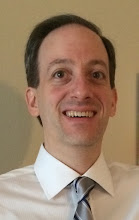
K.C. Jones: Consummate Champion
Players and teams talk so much about the thrill of winning just one championship that it is worth remembering and emphasizing that K.C. Jones, who passed away earlier today at the age of 88, won two NCAA titles, an Olympic gold medal, and eight NBA titles as a player before winning two NBA titles as an assistant coach (1972 Lakers, 1981 Celtics) and two more NBA titles as a head coach. Only two players have won more NBA titles than Jones: his Boston teammates Bill Russell (11) and Sam Jones (10).
K.C. Jones may be the most underrated head coach in NBA history. He not only coached the best Boston Celtics teams of the 1980s--one of which, the 1986 Celtics, will forever be on the short list of greatest single season teams ever--but his regular season winning percentage of .674 ranks sixth in NBA history (minimum of 200 regular season games coached), trailing only Steve Kerr, Phil Jackson, Billy Cunningham, Larry Bird, and Gregg Popovich (Jones is only .001 percentage points behind Popovich, so Jones may move past Popovich on that list this season unless the San Antonio Spurs perform much better than expected). Jones' playoff winning percentage of .587 ranks 13th in NBA history (minimum of 60 playoff games coached). Jones is one of eight coaches who have won two NBA titles; only six coaches have won more than two NBA titles (Phil Jackson, Red Auerbach, John Kundla, Pat Riley, Gregg Popovich, and Steve Kerr).
As a player, Jones was not a great shooter but he was cerebral, tough, and athletic. Jones was drafted by the NFL's L.A. Rams, and he might have made the final cut had he not injured his knee; despite only spending a brief time with the Rams, Jones is credited with being the first defensive back to utilize "bump and run" coverage technique.
Jones' partnership with Russell dates back to their days at the University of San Francisco, where they captured NCAA titles in 1955 and 1956 while putting together a 55 game winning streak. Russell was such a dominant defender that he would tell Jones to run to a particular spot so that Russell could block a shot directly to Jones to start the fast break! The combination of elite athletic ability and supreme basketball IQ/mental toughness is impossible to beat. It is not an accident that Russell and Jones won at every level (college, Olympics, NBA), and anyone who assumes that they would not be very successful as players in this era fails to understand the essence of championship competition.
Jones' NBA statistics are not eye-popping, but he ranked third in the league in assists for three straight seasons (1964-66), each time trailing only Oscar Robertson and Guy Rodgers. The Celtics won the championship during each of those seasons, and it speaks volumes that Jones was not only a stout defensive player for those squads but that he was also the team's quarterback after Bob Cousy retired.
Jones' Boston teammate Tommy Heinsohn passed away a few weeks ago. I interviewed Heinsohn on June 10, 2004. A few days later, I interviewed K.C. Jones. At the time, I was working on an article about their Boston teammate Sam Jones (the article appeared in the December 2004 issue of Basketball Digest), but our wide ranging conversation covered not only Sam Jones but also Bill Russell, Larry Bird, Bill Fitch, Phil Jackson, Michael Jordan, Kobe Bryant, and more.
My K.C. Jones interview has never been published in full anywhere, though some quotes and insights from that interview have appeared in various articles that I wrote. Here, in tribute to Jones, is that June 20, 2004 interview:
Friedman: "The idea for this article came out of an
interview that I did with Slick Leonard, the Pacers’ broadcaster. He mentioned
that he felt that Sam Jones is the most underrated guard in the history of the
NBA. From your perspective as a teammate of Sam's, what made him a special,
unique player?"
Jones: "What made him unique? That's kind of hard to
explain. He had such supreme confidence in his shot. One example that I recall
is when he went for a nine foot jumper and Wilt came over to block it and while
Sam was in the air he said, 'You can't get this one baby' and it went off the
backboard and in."
Friedman: "Was that the game that Wilt went after Sam? I
read about a game in which Sam so infuriated Wilt—telling him that he couldn't
block his shot—that Wilt went after him."
Jones: "I'm not sure if it was that game. I don't think that
Wilt would go after somebody for trash talking. I think that something physical
happened and Wilt went over to shake Sam's hand to say, 'Let's put it behind
us' and Sam thought that he was coming after him so he picked up a stool from
behind the basket."
Friedman: "Oh, so it was kind of a misunderstanding."
Jones: "Yeah."
Friedman: "I noticed in researching this article that Sam
Jones averaged 27 points per game in game seven situations and that the Celtics
were 9-0 in those games. Obviously, that was above his regular season scoring
average. What enabled him to be so successful in clutch situations?"
Jones: "He very seldom went to the basket for the layup. He
would drive and then pull up for the jumper. We did all kinds of things to get
him open or to get Havlicek open. That's the way we played. That's similar to
what Detroit is
trying to do now, work for your teammate. Sam could go one-on-one. He had a
stutter step that would kind of halt your defense and then all of a sudden he
just glides by you. He did that to me in a scrimmage and it just totally blew
my mind that he was so smooth with that. He was driving on the right side from
around the top of the key extended. It looked like he was going to pull up. He
just hesitated, I stopped and then he just went by me. In our offense we always
tried to get him open for shots. When Russell would get the ball for his play
he could just take the ball and shoot it because it was the '6' play but he
would not shoot the ball unless Sam and Havlicek were not open. That's the way
we played. So we liked to get out shooters open because that's the high
percentage play."
Friedman: "Would that be a play where Russell would be
getting the ball on the block looking for cutters and Sam would cut off of
him?"
Jones: "He'd mainly look for our shooters. He wouldn't look
for me or Satch (Tom Sanders), even if I was open. One time he got an offensive
rebound and I was five feet away from him saying, 'Bill, Bill, Bill' and he
looked me in the eye, reached around and threw the ball in the corner to Sam,
which I thought was the right play. Some other player in my position would have
been (ticked) off and then you have a problem but that's not the way we did it."
Friedman: "Right, because your role was not as a shooter on
the team."
Jones: "Yeah, but other teams have guys who are not shooters
but if they are not passed the ball they are ready to fight. My point is, I
considered that the best play because we want the ball in the hands of the guy
with the highest shooting percentage."
Friedman: "You mentioned guarding Sam in a scrimmage. Did
you usually guard him or were you usually on the same team with you playing
point and him playing shooting guard?"
Jones: "I didn't usually guard him. I don't know what
happened in that practice, but that was the first time I guarded him, I
believe. I guarded Bill Sharman most times in practice. I either guarded
Sharman or Bob Cousy."
Friedman: "You mentioned the Detroit Pistons. For my readers
who did not have a chance to see Sam play, what current or recent guard would
you say is most similar to him either in shooting ability or performance in the
clutch?"
Jones: "I guess Jerry West would be one. Maybe Hamilton. He would be
another."
Friedman: "Hamilton from Detroit?"
Jones: "Yeah."
Friedman: "That's interesting. Tommy Heinsohn also mentioned
him. Heinsohn mentioned Hamilton
because he has a variety of shots—the long distance game, the mid-range game
and the driving game. So you would see a similarity from that standpoint?"
Jones: "Oh, yeah. More times than not when Hamilton is driving he pulls up for the
jumper. If he has the defense beaten he goes straight to the basket. More times
than not he's running without the ball and he spends a lot of energy running
around to get open and then he has to go to the other end and play aggressive
defense. That man is in awesome shape. What's like Sam is that he moves without
the ball and when he gets the ball he's going right up for the shot."
Friedman: "What's interesting is that when I brought that
comparison up to Bob Cousy, who I later interviewed, he didn't like that particular
comparison because he didn't think that there was anyone in the modern game who
could really be compared with Sam. It's interesting to me to talk to his
teammates and hear their different perspectives. You are the second one who
brought up Rip Hamilton, which is interesting to me."
Jones: "What did Cousy say as far as comparisons go?"
Friedman: "Well, he was looking strictly on the basis of
skill level and when I brought up that Tom Heinsohn had mentioned Rip Hamilton,
Cousy replied that, for one thing, he didn't see Hamilton as a Hall of Famer and to him that
was disrespectful of Sam Jones' talent. He felt that Rip Hamilton has not
proven that he is a Hall of Famer. I made the point that what Heinsohn had said
to me was not that Hamilton is as good as Sam Jones, but that their styles are
similar in terms of having a variety of shots. There are very few modern guards
who really have a complete game in terms of being able to shoot from deep, from
mid-range and being able to drive. Most guards today only have one of the
three."
Jones: "Yes."
Friedman: "So there is a comparison there from the
standpoint of style. No one is saying that Rip Hamilton is an all-time great—"
Jones: "It's a little early for that."
Friedman: "Right, of course."
Jones: "He's only been in the league a few years."
Friedman: "Right, he's only been around for a few years and
this is his first championship."
Jones: "Yeah. You take Kobe,
you take Hamilton,
you take Sam, you take Jerry West—in crunch time you are looking for these
people, you want these people to have the ball."
Friedman: "So from the standpoint of producing in the clutch
you would put Kobe
in there as well because he hits last second shots. He and Sam had different
playing styles, but they both produced in the clutch."
Jones: "The style is different, but what I'm saying is that
in crunch time you want the ball to go to your best shooters. That's what I'm
saying. I'm not talking about style—whether they use a spin move or all
that—I'm saying in crunch time the ball goes to your best shooters. They
approach it in different ways."
Friedman: "Sure. Another thing I want to ask you about—and I
know that a similar question was once asked of Bill Russell about a
hypothetical matchup with Kareem and his response was, 'Young man, you have the
question backwards'—I'm interested from your perspective how you would picture
a matchup of Sam Jones in his prime playing against Kobe or McGrady, what would
that matchup be like, what strengths would Sam Jones use to counteract Kobe or
McGrady, who are both a little taller than Sam?"
Jones: "Kobe
would have a very difficult time staying with Sam defensively."
Friedman: "From a speed standpoint?"
Jones: "Yes, from speed or quickness, whatever you want to
call it. Could Kobe stay with Hamilton? I don't think so. Kobe
couldn't stay with Sam and maybe Sam couldn't stay with Kobe. Thinking in terms of guarding each
other, I don't see it in that mode. There are changes and moves that can be
made; they can guard other people so that they don't wear themselves out and
wear their minds out guarding the best player on the other team."
Friedman: "So if they played against each other it would be
a real shootout because they both would be scoring a lot."
Jones: "Well, yeah. They are masters of the offensive end,
they don't master the defensive end. So you have to be someone who is defensive
oriented to guard the Kobes and the Same Jones and the Hamiltons. That's what
happened in Chicago when Drexler from Portland was guarding Jordan (in the 1992 Finals). I
thought that was not a good move, putting Drexler on Jordan."
Friedman: "You're wearing out your best player."
Jones: "Yes, plus you experience a defeatist attitude, a
sense of fear, guarding Jordan.
Why would I put one of my best shooters out there to guard Jordan? It
doesn’t make any sense to me."
Friedman: "So from your standpoint, if Sam Jones was playing
at the same time as Kobe
they might not even be guarding each other. You might cross-match or do
something so that they wouldn't be facing each other."
Jones: "I think that would be the best move. If you saw
Drexler in the game, it just took his mind away."
Friedman: "You're talking about the game in the Finals when Jordan hit all
those three pointers."
Jones: "Yeah, whichever game that was. I know that Drexler
is an offensive player and great at being an offensive player. How many great
shooters do you see who are great on the defensive end?"
Friedman: "Very few."
Jones: "Very few."
Friedman: "Actually, Jordan would probably be one of the
exceptions since he was Defensive Player of the Year in addition to winning all
of the scoring titles. But your point is well taken. If you have a minute, I'd
like to switch gears. I'd be interested to ask you some questions specifically
about your career for use in a future article. I see some parallels between
your coaching career and Phil Jackson's coaching career in terms of reluctance
in some quarters to give you credit for your teams' success. With Phil Jackson,
he has won nine championships but people say, 'He always had the best player.
He had Jordan or he had
Shaq' and I think that kind of echoes from your career in Boston when you won championships but people
said that you had a Hall of Fame frontline. Do you see a parallel in that sense?"
Jones: "There was a great coach before I got to the Celtics,
Bill Fitch. He was a great coach. He did a super job of winning the
championship in 1981. I had the same players and went to the Finals four times
in five years and won two championships."
Friedman: "Right. That’s a very similar run to what Jackson just had with the
Lakers, winning three titles in five years."
Jones: "What you mentioned was that because I had these high
profile players, that's how I was able to have a championship team and go to
the Finals that often. That's what you're saying, right?"
Friedman: "I'm not saying that. I'm saying that's a
criticism that others have said. I don't think that it is valid. I think that
it is a challenge—and I wanted you to speak about this—when you have that many
talented players to get them to accept roles and to understand what has to be
done to win."
Jones: "I was speaking to the criticism. Of course, I'm not
an entertainer, which all coaches should be, because the media lives off of
that. I was just the opposite. I guess you are saying that (people say) that Jackson was a quiet guy
sitting on the sidelines and only reason he won was because he had Jordan and
Pippen. That really doesn’t make a lot of sense to me."
Friedman: "I agree."
Jones: "Here's what you've got. In college, the best coaches
are the ones who do the best scouting. They come up with the Okafors and the
Bill Russells and the Kareems. Without these great players, these great
individuals, how are you going to get there? Shaq and Kobe, they won for three years. Then Jackson is criticized for
having Jordan and Pippen. I don't understand that."
Friedman: "I don't understand it either. I think that it is
a great challenge. The team that you had in Boston, which had Bird, McHale and Parish—any
one of those guys could demand 25 shots a game. You were able to get them to
work together to understand how to share the ball and—"
Jones: "It's the same thing with Bill Fitch. He had the same
players and he did a great job with them to win a championship. But there
wasn't any question that he had Larry Bird and Kevin McHale and Danny Ainge. He
is not mentioned in the same way as Jackson
and I am."
Friedman: "When you first took over in Boston what was the biggest challenge that
you faced?"
Jones: "The biggest obstacle is always the communication
factor. If you don't have good communication between you and your top players,
then you are really alone. What Jackson did in Chicago was he had Jordan
and Pippen as his protectors. Jerry Sloan did that in Chicago
and he also did it with Malone and Stockton in Utah. I'm sure Jackson did that with Shaq."
Friedman: "So the key thing is to first make sure that the
big star buys into your program and accepts what you are doing and then
everyone else falls into line?"
Jones: "Those players have to be included. Your top two
players, like Russell and Cousy. It's even better if you have three players.
Your major guys are the ones who have to be included in your strategy planning.
They have thoughts. Red Auerbach did that with Cousy and Russell. If you don't
do that there is a fence there. You are alone. A wall is up."
Friedman: "You mentioned something about demeanor, that you
were not a media darling or doing things that the media would pick up on and
that is similar to Phil Jackson, because sometimes people will criticize him by
saying, 'Look what is going on on the court and he is sitting there looking at
his fingernails.' When you were on the sidelines you were not very
demonstrative. Your teams were very effective. People would turn that into a
criticism. I think that that is another way that you were similar to Phil
Jackson. You had a very calm demeanor on the courtside, you weren’t running
around or getting technicals."
Jones: "That's the entertainment factor. John Wooden seldom
got off the bench, but that's what the media looks for and some coaches have a
way of giving them what they want. Rick Pitino is great on the sidelines with
the press and his demeanor on the court. That's awesome stuff. You have others
who do the same thing and that's their coaching style."
Friedman: "From your standpoint, coaching—"
Jones: "Larry Brown in Detroit,
what does he do?"
Friedman: "To me, he is a little bit of a mixture. A lot of
times he is getting up and getting excited but sometimes—I think that he is a
hybrid. I think he is in the middle. He is not as demonstrative as some, but he
is not always just sitting there quietly—"
Jones: "Not in the playoffs (laughs). Maybe in the regular
season. In the regular season there is a tomorrow."
Friedman: "Right. Your coaching philosophy, as I understand
it, is your coaching was done in practice. You prepared the team for what they
had to do and you didn't need to do a lot of histrionics on the sidelines—"
Jones: "It wasn't me to be that demonstrative and it's not Jackson to do that.
Brown, same thing there. Then you have others—Bill Fitch was great, he was up
on the sidelines. He could have been a comedian on the stage because he was
great with the media and he was a super bright person."
Friedman: "One other thing that I wanted to ask you about is
something that I recall and then I see it all the time on ESPN Classic. I
noticed something about where Larry Bird would receive the ball. Usually when
you have a great player who is predominantly right handed, when they catch the
ball on the block—whether is it Shaq or Hakeem or Duncan—you can go down the
line—they usually like that left block. What I noticed a lot of times—"
Jones: "The left block facing the basket?"
Friedman: "Right. Exactly. The left block facing the basket.
If you picture Hakeem posting up or Shaq, they usually run to that left block.
That seems to be where the great players who are right handed tend to go."
Jones: "Except for Kareem."
Friedman: "Right."
Jones: "Kareem liked the right block."
Friedman: "Yeah. But I noticed with Larry Bird a lot of
times when he ran that exchange with Parish or if he was posting up and Ainge
or Dennis Johnson were feeding him, a lot of times Bird would go to the right
block or even the right side midway between the foul line and the block. I
wondered if there was a particular reason why he received the ball there. I
don't remember a lot of great players who were right handed getting the ball
there. I've always been curious about that."
Jones: "Well, hey, that’s something new to me. I never
thought about that. Of course, guys have special places they like to be. Right
handed guys like to be on the right block, is that what you’re saying?"
Friedman: "Well, my observation—maybe I’m wrong and you can
correct me. It seems to me that right hand dominant players tend to go to the
left block—I'm thinking of Shaq, Tim Duncan, Hakeem Olajuwon. I know that you
mentioned Kareem. I think that he would go to either block."
Jones: "Yeah."
Friedman: "I noticed a lot of times with Larry Bird—I
remember watching it during the 1980s and then I see it again on ESPN Classic—a
lot of times he was getting the ball on the right wing, midway between the foul
line and the post. I didn't know if this was by design or if that was where he
liked to get the ball or if it had anything to do with the spacing of the other
players. I didn't know if there was a grand reason behind it or it just
happened that way."
Jones: "Well I never saw a grand reason behind Larry doing
that. Of course, shooters follow the ball, and if you are a Reggie Miller or a
Larry Bird or whoever, it's wherever you get the ball and deal with it. But
then there are plays that put you in position to do that. Then it's, 'What side
do you want it on?' or 'What block do you want it on?' Then you know that’s the
way it goes and that’s how it’s dealt with."
Friedman: "Oh, OK. It seemed like he would get the ball a
lot of times in that area. I even noticed it when they replayed the old 1979
NCAA Championship against Magic Johnson. I didn't know if it was something that
developed early in his career for some reason. I know that he was effective
anywhere on the court, but I didn't know if there was a particular reason he
liked that spot, kind of midway between the foul line and the post. If he had a
smaller guy it seemed like he would back him in—"
Jones: "Yeah."
Friedman: "If he had a bigger guy he would drive. In the
(1988 playoff) game against Dominique, it seemed like he was getting the ball a
lot of times in that spot and then he would wheel around and drive into the
lane, like in that fourth quarter when he had 20 points."
Jones: "Yeah. Of course, players have spots that they like
or positions that they like to be in to make their favorite move down there.
You’re saying left block and right block and some of them could do both, but I
was never really that aware of that except coming off certain plays if he
wanted to post up he would come to either block, the block that he liked best.
More times than not, Larry was on the right side of the court as a forward.
Kevin was always on the block—him or Robert."
Friedman: "Right. Bird would be kind of in a mid-post
position, between the foul line and the block or even outside the three point
line."
Jones: "Yeah, Larry would come from the right side or the
left side or coming off a screen set by Robert or Kevin. A lot of times he was
on the right post."
Friedman: "Yeah, that’s what I'm saying. I noticed that on
tape. I found that interesting. I didn't know if there was a specific reason. I
guess some of that just comes out of the flow of the game."
Jones: "Yeah. It comes out of the flow of the game. What
about other players? Hamilton,
he does that circle thing, he comes around to the right side a lot of times and
all of a sudden he’s up in the air for the shot."
Friedman: "He's perpetual motion."
Jones: "Yeah, but all he is doing is trying to get open.
It's like a 1-4 setup, two guys on the right block, one guy on the left block
and the point guard's up top. Hamilton’s
down under the basket trying to find which way he can go to get the defense
knocked off. So he'll fake this way and go that way. Or fake this way and go
the other way. He's coming around and that's how he gets open."
Friedman: "He kind of bounces around like a pinball. He
reads, he goes by one of his big men and reads which way his defender is going
and he pops out the other way."
Jones: "Yeah. He's doing a mile run to get open to get his
shot on a court that is what, 50 by 90?"
Friedman: "Right. Exactly."
Jones: "But that's him. There are different ways of doing
it. Oscar Robertson would dribble you this way or that way for 15 seconds, let
you make a mistake with one of his subtle fakes and he's by you. Different
strokes."
Friedman: "Oscar's philosophy, as I understand it, was
always that he was never satisfied. If he had a 15 foot shot, he would try to
back you in or fake so that he could get a 12 foot shot. If he had a 12 foot
shot, he was always trying to get closer to the basket, and of course he had
great size, so he was always trying to get the closer shot. He was never
satisfied."
Jones: "Well, why not?" (laughs)
Friedman: "Sure, it makes sense. Well, the current players
don't always necessarily think that way. If the shot is open then they think it
is a good shot. They are not trying to get closer. It’s not the same type of
approach. Of course, Oscar's approach makes sense."
Jones: "That's what you work for. If you can get it, you get
it, but you have to work for it."
Friedman: "One more thing that I want to ask you—"
Jones: "There is one thing that I want to say. You were
talking about that I had Larry Bird and Kevin McHale and all those people and
that's how I was able to win. Then, I mentioned Bill Fitch. But I was not mentioning
Bill Fitch in a negative way."
Friedman: "No, I understand."
Jones: "I was talking about the critics and what they were
saying. If I had these people here and that is the reason that I got to the
Finals and won championships—he was coaching the same guys."
Friedman: "No, I understand your point exactly."
Jones: "I wanted to be clear on that."
Friedman: "OK, no problem there. I understand what you are
saying. Just to make it clear from my standpoint, I don't believe that that is
a valid criticism. I am bringing up something that other people have said to
get your reaction to it."
Jones: "That's what I was reacting to, not something that
you said, but what you were asking."
Friedman: "When I thought about it and realized that I would
have the opportunity to speak with you about Sam Jones, I was also thinking
about a future article that I could write about you in a similar vein. The
article that I am writing about Sam Jones is called 'Reconsidered,' when I look
at somebody's career and take a different perspective—look at someone who has
been underrated or neglected. I was thinking that in a future article I could
do something very similar about your coaching career, because I see a lot of
parallels between your coaching career and Phil Jackson's in terms of not
receiving what I would consider to be adequate credit. Like you say, they don't
look at Bill Fitch that way for whatever reason, but, sometimes, critics will
say, well someone had the players—and someone else may have had the same players
and they don’t make that criticism—it doesn't always seem fair."
Jones: "Look, that's being—what do you call it—not biased,
but that's going straight at the coaches, K.C. or Jackson, because they had the
talent. Those critics are saying that they really don't think much of these two
coaches."
Friedman: "Right and some of it also gets back to what you
were talking about in terms of how the coach may relate to the media or how the
media perceives them."
Jones: "That's it right there. Bill Fitch had a great
ability in controlling the media through his humor. He'd jump up every now and
then and scream. They'd feel the spirit he put into it—a great communicator and
that's what the media wants. That's what they accept. With a guy like me,
they're not going to get much, because I'm the guy who sits quietly on the
bench."
Friedman: "Right. In that sense also, although he hasn't won
a championship as a coach, there is a little similarity between you and Maurice
Cheeks from a demeanor standpoint. Maurice Cheeks is not real demonstrative, he
is kind of quiet and that doesn't mean that the person is not coaching, that's
just his personality—"
Jones: "If he had been in there and won a couple
championships then he would have the same problem I have." (laughs)
Friedman: "Right. Exactly."
Jones: "And Dr. Jack Ramsay."
Friedman: "Right. One other thing that I want to ask you
about is not the happiest memory from your coaching career, but I want to have
your perspective on it. History is generally told from the standpoint of who
won—also, in light of what happened this year in the Finals when we had an
upset, of course. You coached the Washington Bullets in the Finals against Golden State
(in 1975) and that was a team that was considered to be the favorite but you
did not win. We always read the story from the perspective of what Rick Barry
did or Golden State or whatever, but from your
standpoint what do you feel like happened in that series? From your standpoint
why did that series go the way it did?"
Jones: "Well, the scenario was that there was a circus that
was going on during the Finals in San
Francisco. So that changed the whole format from the
usual 2-2-1-1-1. The change was we had the choice of playing game one in San Francisco and the next two in Washington or the other way around. I made
the mistake of taking the first game at home and being on the road for the next
two. You make a boo-boo like that, it makes it very difficult to win the
championship as the favorite."
Friedman: "What you're saying is that when you lost the
first game it put you behind the eight ball because you didn't have the home
court advantage that you expected to have."
Jones: "Yeah, that was what the format was. By them winning
the first game—and they won it narrowly, because we missed a layup that
would've won the game—Golden State now felt confident as all get out, rather
than being intimidated by the 2-2-1-1-1."
Friedman: "That's something that I know about because I've
researched that series a little bit and read about what happened, but that's
something that is not mentioned a lot when people talk about the upset or what
Rick Barry did, but that was a big disadvantage—"
Jones: "What you're saying is that they just come out with
their thoughts about how I did a terrible job because I was favored, but
without mentioning how the series was set up. Nothing is mentioned about the
circus, nothing is mentioned about the 1-2 format."
Friedman: "That also says something about where the NBA
ranked in the sports universe or the entertainment universe at that time. I
don't think that kind of scheduling could happen in today's NBA. I don't think
that there could be some type of scheduling snafu where you end up playing
1-2—"
Jones: "Golden State, they had that schedule set (with the circus)
because they felt that Golden
State would not (still)
be in the playoffs. So they used that playoff time to have the circus but all
of a sudden Golden State beat Chicago
and then it was like, 'Oh, (shoot).'"
Friedman: "Right, 'What are we going to do?'"
Jones: "'We have a circus here, da-da-da,' and the
commissioner said, 'OK, 1-2.'"
Friedman: "But nowadays the NBA is such a huge business I
don't think that anyone—even the Orlando Magic with the horrible record that
they had last year—would have scheduled a circus to be in there during playoff
time until they were mathematically eliminated. I don't think that anyone would
say before the season starts, 'I don't think that we're going to be in the
playoffs, let's have the circus here in May.' Well, I won't take up any more of
your time. Thank you so much for your help with the Sam Jones article. As I
mentioned, at some point I would like to do a 'K.C. Jones Reconsidered' dealing
with your coaching career."
A few minutes after the conclusion of the interview, K.C.
Jones called back to state that he wanted it on the record that "Bill Fitch was
a better coach than I was." K.C. Jones made it very clear that his comments
about both of them having the same players but Fitch's coaching skills not
being critiqued in the media the same way that his were did not mean that he
did not respect Fitch as a coach. I reassured K.C. Jones that I understood what
he had meant during the interview and that I have no intention of trying to
create some type of rift with Coach Fitch. The operative comparison is between
the laid back bench demeanors of both Jones and Jackson.
It speaks volumes about Jones' character (1) that he spent so much time doing an in depth interview with a writer who he did not know and who is not famous and (2) that he put so much thought into his answers, to the point of calling me back to clarify that he meant no disrespect to Coach Fitch. Longtime 20 Second Timeout readers know that Julius Erving is my favorite player of all-time. It goes without saying that I was not rooting for Jones' teams during the 1980s--but I hope that it is also evident how much I respect him, and how much research and preparation I did (for a basketball lifetime, not just for one interview) before I spoke with him.
I am happy that I shared that time with K.C. Jones, and I hope that this interview helps basketball fans cultivate a greater appreciation for his accomplishments. I never wrote the "K.C. Jones Reconsidered" article, but in a sense that is what this article is. K.C. Jones deserves to be reconsidered, and to always be remembered as a championship player and a championship coach.
Labels: Bill Russell, Boston Celtics, Clyde Drexler, K.C. Jones, Kobe Bryant, Larry Bird, Michael Jordan, Phil Jackson, Richard Hamilton, Sam Jones, Slick Leonard, Tommy Heinsohn
posted by David Friedman @ 7:09 PM


"The Mamba Mentality"
Kobe Bryant's new book
The Mamba Mentality overflows with insights that the five-time NBA champion learned during his 20 year career. The text is illustrated by photos taken by Andrew Bernstein, the visual James Boswell to Bryant's Samuel Johnson during Bryant's career. This book is an excellent read for anyone who is interested in what makes Kobe Bryant tick, and for any basketball player who is looking for a blueprint for improving one's basketball skills.
Bryant mastered all facets of the game. It is that technical, all-around completeness combined with incredible competitive drive, a fanatical will to win and the capacity to play through injuries that separated Bryant from all of his contemporaries and elevated him into basketball's
Pantheon.
I had the privilege of watching Bryant play in person on many occasions, during several of which he went head to head against LeBron James. During most of the times that they faced each other when I attended in person, Bryant was at the top of his game while James was a great player who was still learning his craft. The mainstream media narrative had James surpassing Bryant some time before that actually happened; even during a 94-90 Cleveland win over L.A. in 2007,
an observer with an educated eye could see the difference between Bryant and James:
Andrew Bynum had 17 points and 11 rebounds but he missed two free throws
that could have tied the game with 11.9 seconds left. Bryant stormed in
to the lane to rebound the second miss and called a timeout, giving his
team one last chance to win or tie. Someone asked Bryant about how he
got that crucial rebound but Bryant laughed and said, "I'm not giving up
my secret. I told him (James) I was going to get it. That's just years
of experience." Bryant winked to a courtside camera after the play,
provoking boos from the crowd when that image was displayed on the giant
overhead screen...
Later, after most members of the media had left, I asked Bryant if in
his current injured state the court seems much larger and harder to
traverse than usual due to his limited mobility and his eyes widened in
acknowledgment as he said "Yes" before reiterating his earlier comment:
"But I'm going to go in the gym, work on my jumper and figure out how to
get through this."
In
The Mamba Mentality, Bryant--while not specifically referencing that crucial rebound or that game--explained his approach to playing against James and, in the process, confirms what educated, informed observers could detect when watching these two all-time greats square off. The book includes Bryant's scouting report-like take on his matchups versus several different players. The section on James begins with, "I enjoyed contact. LeBron is bigger than me in height and width, but I enjoyed hitting, and getting hit, a lot more than him. That impacted our head to head matchups" (side note: as enjoyable as this book is, it would have been even better with a more skilled co-writer, or with an editor who knows to write "LeBron is bigger than I am" and "a lot more than he did"). A major part of the "secret" of Bryant grabbing that key rebound versus Cleveland is that Bryant thrived on contact and knew how to use body contact/leverage to his advantage. By virtue of size, position and team role, James was always going to average more rebounds than Bryant, but from a fundamental standpoint Bryant was a superior rebounder, and it was always apparent that, if necessary for one key possession, Bryant could go get the ball in ways that James could not or would not, much like Michael Jordan put together a string of big rebounding performances for the second three-peat Chicago Bulls during one of Dennis Rodman's extended absences from the lineup.
Bryant added, "When he was defending me, LeBron would use his body and not cushion with his forearm because he was used to being stronger than everybody else. With me, though, that worked to my advantage. I like the physicality, and I know how to use my hands to move him back just enough where I could turn the corner." Bryant noted that sometimes James would front him in the post to combat Bryant's superior technique/footwork and Bryant would play mind games with James, teasing James about fronting a much smaller player.
James' footwork and defense improved over time, but he never used his physical advantages--which are greater than Bryant's--to the extent that Bryant used his, because James has never enjoyed physicality to the extent that Bryant did.
James surpassed Bryant as a regular season performer some time around 2009, as James hit his physical prime while Bryant entered a stage in his career during which managing his body so that he peaked during the playoffs was the primary concern. Bryant remained the more technically sound player--James has still not surpassed prime Bryant in that regard--and Bryant remained the better, more consistent playoff performer but the younger, bigger, stronger James was better equipped to weather the 82 game regular season grind. However, despite the physical advantages James enjoys over Bryant, peak James never quite reached the same level as peak Bryant. Slightly past his peak Bryant won back to back titles alongside Pau Gasol, Lamar Odom and a bunch of role players, while peak James went 2-2 in the NBA Finals while playing alongside future Hall of Famers Dwyane Wade and Chris Bosh. Bryant went 5-2 in the NBA Finals overall, while James' Finals record currently is 3-6. No, that is not the only metric that matters and yes, one could write a book dissecting all of the contextual factors that affected both players' Finals resumes--but the bottom line is that prime Bryant had no skill set weaknesses, he lifted bad teams to the playoffs, when he had the weapons he almost always brought home the title and he did not make excuses or pout or quit.
Put even more simply, Bryant played 20 seasons for one franchise and during that entire time his main focus was winning championships. That does not mean he did not make mistakes or did not have other interests--he is now an Oscar-winning filmmaker--but Bryant's life centered around winning titles. James has always been chasing the next contract, the next team, the next side interest; he has put up great individual numbers and he has won championships but no one can honestly say that he devoted his life to winning championships the way that Bryant did.
Bryant was by no means a flawless technician from the start but he was a
quick study. The book includes a picture of a young Bryant defending
Jordan in the post. Bryant points out flaws in his balance and
technique, and states that he looked at pictures and film in order to
eliminate those weaknesses. I remember a young Bryant struggling to
guard Portland's Scottie Pippen and Steve Smith in the post during the
playoffs but Bryant's post defense markedly improved in a short period of time after that.
Bryant discussed the evolution of his relationship with Phil Jackson. I remember Jackson once publicly calling Bryant a "hard-headed learner" who would not accept anything at face value and who constantly had questions. Bryant acknowledges that Jackson interpreted those questions as a challenge to his authority but Bryant insists that he simply thirsted for knowledge. Jackson and Bryant worked together much more smoothly the second time that Jackson coached the Lakers, and Jackson accepted Bryant's need to understand the reasoning behind certain decisions.
Bryant's observations about his various rivals and about the nuances of the game crackle with insight. I will offer just a couple examples and I urge you to read the book to get a full taste.
One, Bryant described a 1997 matchup with Clyde Drexler as a "seminal moment"; after an awful first half, Bryant scored 27 points in the second half. Bryant declared, "I always admired Clyde" and Bryant noted he learned a lot about defense from competing against him. For instance, Drexler would use one hand to obstruct the offensive player's vision while using the other hand to go for deflections/steals, a technique that Bryant added to his defensive repertoire.
Two, Bryant explained his mentality about playing through injuries, which was the point of the question that I asked the hobbled Bryant after the game during which he used one of his "secrets" to snare a crucial late game rebound, and which is why Bryant was pleasantly surprised by a question that acknowledged the essence of the nature of the challenge he faced in that moment. When Bryant was injured, he assessed what he could do and what he could not do and then adjusted accordingly. That may sound simple and obvious but Bryant's approach took this to the next level. For instance, Bryant admits that the
avulsion fracture to the index finger on his shooting hand never completely healed and this forced him to permanently change his shooting stroke. His index finger used to be the last finger to touch the ball prior to releasing the shot but Bryant switched to using his middle finger. "Making that change took a couple of practices. Not average practices, though. Days flooded with mental and physical work. I had to mentally download the software that was the new form, and then drill it in." Bryant is not sure if the new form made him a better shooter or not. He deems that to be an irrelevant question; the injury forced the change, and
the change was good enough to win a championship that season (and
the next season), which is "the only thing that matters."
Labels: Clyde Drexler, Kobe Bryant, L.A. Lakers, LeBron James, Michael Jordan, Phil Jackson
posted by David Friedman @ 11:56 PM
King James Reigns in Houston (2006 NBA All-Star Weekend)
Note: This article was originally published
on February 20, 2006 at HoopsHype.com but the link no longer works, so I
have reprinted the article in its entirety below.
I began the final day of All-Star Weekend by attending the NBA Legends Brunch, which brings together an impressive array of basketball talent representing several generations of excellence. The National Basketball Retired Players Association (NBRPA) held the seventh edition of this event on Sunday morning at the Hilton-Americas hotel.
Emceed by TNT Studio host Ernie Johnson, this year's brunch recognized Cynthia Cooper, Marques Haynes, Calvin Murphy, Kenny Smith, Clyde Drexler and Hakeem Olajuwon. There was a moment of silence in memory of the 14 NBRPA members who passed away in 2005 and the issuing of Commemorative Championship Awards to the 1993-94 and 1994-95 Houston Rockets teams.
NBA Commissioner David Stern began his remarks to the group by saying, "It's been a spectacular week" and he praised the retired players for demonstrating their "commitment to community" by their actions during the week, including hospital and school visits and charitable donations. Stern said, "Respect for the tradition of the game is so important" and concluded by noting, "If you forget where you came from you will never get where you are supposed to go."
When Cynthia Cooper received her award, she emphasized the perseverance that carried her from growing up in Watts to 10 years of playing pro basketball in Italy before winning four WNBA titles with the Houston Comets. Cooper told me that the brunch "is incredibly special. Just being one of the honorees and being a part of the NBRPA is incredible. I grew up watching a lot of the veteran talent in this room."
I asked her who in particular she admired as a kid and she enthusiastically replied, "Norm Nixon, Magic and Jamaal Wilkes--all of the Lakers. I was an L.A. girl and grew up as a Lakers fan. Oscar Robertson is so incredible. I feel incredibly honored to be part of such a talented group."
She is pleased to be on the same list with Murphy: "Calvin is a great guy. What happened is unfortunate but it's good to see him bounce back. It's so wonderful for the NBA and NBRPA to honor Calvin for his contributions to the sport of basketball--not men's or women's but basketball in general."
Some players struggle to adjust to retirement. Not Cooper. "The adjustment was easy for me because I have twins," Cooper said. "They keep me pretty busy. I have boy-girl twins and I've always put family first, so it wasn't hard for me to make the decision or the transition to go from being an active player to a retired player."
Haynes, who received the Humanitarian Award, paid tribute to the Rens, the Harlem Globetrotters and other pioneering black teams of the early 20th century. He reminded the audience that his 1948 Globetrotters defeated George Mikan and the world champion Minneapolis Lakers, debunking the idea that the Globetrotters were merely showmen. This achievement paved the way for the eventual desegregation of the NBA.
Haynes said that there must be a dialogue established with the NBA to create a pension program for Globetrotters players who were denied the opportunity to play in the NBA. Haynes' fascinating stories exceeded his allotted time, leading to an awkward moment when Ernie Johnson came back to the podium while Haynes was still talking.
I spoke with Haynes after the brunch and he told me, "I tried to say as much as I possibly could. They wanted me to keep it to five minutes."
But the pension issue is so important that Haynes had to bring it up in the hope that he could generate some movement on that front. "We've been around a long time. We call ourselves 'the survivors.' We were denied the opportunity to play pro ball for the same reason the Negro Leaguers were--the color of our skin. This is something that could be rectified by the NBA instituting a plan similar to if not identical to what Major League Baseball did for the Negro Leaguers."
During his acceptance speech, Kenny Smith described the feelings of anger and helplessness that swept over him when Hurricane Katrina cut its path of devastation through the Gulf Coast. He decided to do something immediate to help the storm's victims and within four days he organized a charity basketball game that was televised on TNT and raised significant funds to help the displaced people. Smith insisted that each NBA player who participated must donate at least $10,000 in goods, services or products and that the player must distribute those wares personally, not via his agents or handlers.
Calvin Murphy's remarks were tinged with great passion and emotion. He lost his job as a Rockets broadcaster in the wake of some allegations that proved to be baseless and Murphy noted how much he misses being on the air talking about basketball, a job he held for 13 years after his Hall of Fame playing career.
Before he went on stage, I asked Murphy what this award means to him. He replied, "With what I've just been through in my life, this is perfect timing--to be honored by your peers--people who believe in you and want you to know that they believe in you; this is the first day of the rest of my life."
Julius Erving said that Clyde Drexler had the complete package as a player and that Drexler was part of the showmanship lineage that began with Bob Davies and Bob Cousy and continued with Elgin Baylor and Connie Hawkins. Erving praised Drexler's "special flair and elegance." Erving played against Drexler for several years but they did not have a chance to interact much until Drexler invited Erving, who was by then retired, to a ceremony in Portland honoring Drexler. At that time Erving found out how much Drexler had always admired Erving and a big brother-little brother bond formed between them. Erving suggested that just as he played second fiddle to Kareem Abdul-Jabbar, Drexler was the second-best player in the game behind Michael Jordan and that there is no shame in that.
When Drexler spoke he dismissed the notion that Dr. J played second fiddle to anyone, observing that every kid wore Dr. J shoes and wanted to be like Dr. J.
Olajuwon was unable to attend the brunch, so Yao Ming accepted the award on his behalf, noting, "Houston has always had a tradition of great big men." Next, Shaquille O'Neal spoke about the achievements of George Mikan, who passed away in 2005, describing him as the first great NBA big man. O'Neal said that he paid for Mikan’s funeral because that is what a son should do for his father. Rudy Tomjanovich, who coached the Rockets to titles in 1993-94 and 1994-95, thanked the NBRPA for honoring those teams and called to the stage several members of those teams who came to the brunch: Carl Herrera, Kenny Smith, Mario Elie and Clyde Drexler.
The brunch concluded with a hysterical standup routine by Chris Tucker, who did impressions of O’Neal as a police officer, Allen Iverson, Dikembe Mutombo and others.
Afterwards I spoke with more legends than I have space to quote here, but it is always special to hear from George Gervin.
The Iceman was happy to see Murphy honored: "Murphy looked good. He has always been a strong individual. We all knew he would bounce back. It's so unfortunate that he had to go through things but that's what life is about: life is about recovery and he's doing that."
With everything else that has gone on these past few days it is important to remember that All-Star Weekend does in fact culminate in the All-Star Game on Sunday night.
Some anticipated themes played out: the West players fed local hero Tracy McGrady the ball and for a while he was on pace to threaten Wilt Chamberlain's All-Star Game record 42-point outburst. As Fred Carter might say, when I was inquiring earlier in the week about the possibility of Kobe Bryant breaking that mark I was in the right church but the wrong pew; Bryant finished with eight points, although he did play a strong floor game with a team-high eight assists, seven rebounds and three steals. He also hit a spectacular fadeaway 20-foot jumper to tie the game at 120 with 32.3 seconds left.
East Coach Flip Saunders did put all four Pistons on the court at the same time on a couple occasions, with Paul Pierce in the role of "fifth Beatle." The West led by as many as 21 and McGrady seemed to have MVP honors sewn up, but the East, spearheaded by the Pistons/Pierce combination toward the end of the third quarter, made a spirited rally and eventually took the lead. Then, LeBron James took over, finishing with 29 points, defending McGrady's attempt to tie the game at the end and becoming the youngest All-Star Game MVP, surpassing Oscar Robertson.
In his postgame remarks to the media, James made a very candid statement about McGrady's shot: "On his way up, I got a piece of his arm and a piece of the ball, which made it short."
Reflecting on winning the MVP trophy, James said that individual accolades are not as important to him as being on a successful team.
Starting the day talking with the legendary Marques Haynes and finishing the day watching a potential legend in the making in LeBron James is the perfect way to conclude an intense and wonderful basketball weekend.
Labels: 2006 NBA All-Star Weekend, Calvin Murphy, Clyde Drexler, Cynthia Cooper, George Gervin, Julius Erving, Kenny Smith, LeBron James, Marques Haynes, Tracy McGrady
posted by David Friedman @ 3:55 AM
Honoring the Past, Anticipating the Future (2006 NBA All-Star Weekend)
Note: This article was originally published
on February 18, 2006 at HoopsHype.com but the link no longer works, so I
have reprinted the article in its entirety below.
My first stop on Friday was the Hilton-Americas Hotel, site of the Naismith Memorial Basketball Hall of Fame press conference announcing the 2006 Finalists for election. Dick Stockton stood on a stage flanked by Hall of Famers Oscar Robertson, Bill Walton, Dr. Jack Ramsay, Gail Goodrich, David Thompson, Clyde Drexler and Moses Malone and read off each of the names of the 16 Finalists, followed by brief career summaries. Ten candidates were nominated by the North American Screening Committee--players Charles Barkley, Ralph Sampson, Chet Walker, Adrian Dantley, Joe Dumars and Dominique Wilkins, coaches Don Nelson and Gene Keady and contributors David Gavitt and Dick Vitale. The Women's Screening Committee selected coaches Van Chancellor and Geno Auriemma, the International Screening Committee chose coaches Pedro Ferrandiz and Sandro Gamba and the Veterans Screening Committee tapped player John Isaacs and contributor Ben Kerner. The final vote takes place later in the year and the results will be announced on April 3 during Final Four weekend; at least 18 votes from the 24 member Honors Committee are required to earn induction.
When Stockton concluded, Barkley came to the podium and addressed the assembled media, saying "Moses Malone was most influential in my career" while also acknowledging guidance provided by Adrian Dantley and John Drew. He thanked the Hall of Famers for taking the time to come to the event and offered much respect to Oscar Robertson, saying that there is a "short list" of players who can legitimately be considered for the title of greatest ever: Bill Russell, Michael Jordan and Oscar Robertson.
After Barkley's remarks, the Hall of Famers were available for media interviews. Barkley was the center of attention, attracting a media horde three rows deep packed tightly around him, jockeying for position and lobbing questions toward him. Asked about the difference between playing in the Olympics in 1992 and 1996, Barkley noted that in 1992 the players from other countries did not mind losing by 40 or 50 points as long as they received some signed jerseys or shoes but by 1996 the foreign players were telling Barkley where he could stick the shoes--the intimidation factor was gone and Barkley knew then that it was only a matter of time before the U.S. lost to a foreign team.
I asked Drexler if he thinks that Kobe Bryant has a realistic shot to break Wilt Chamberlain's All-Star Game record of 42 points. He thinks that this is very unlikely because of the energy expenditure it would require and because it is difficult for one player to cast up so many shots in an All-Star Game. When I mentioned that Michael Jordan once had 40 points in an All-Star Game, Drexler correctly noted that that took place in Jordan's home city of Chicago and that when you are playing in your home city, the other players are more apt to feed you the ball.
Next came the media availability sessions for the All-Star Saturday participants, followed by the All-Stars themselves. That rapidly turned into a three-ring--or, to be precise, dozen-plus table--circus. The crowd at Kobe Bryant's table dwarfed the one that had been around Barkley and some media members seemed to be employing martial arts maneuvers in an effort to cut in front of others and get better access. Of course, that meant that it was the perfect time to talk to other players.
Slam-dunk contestant Hakim Warrick told me that Dr. J was his favorite dunk artist as a kid; his pick among recent dunkers is Vince Carter: "He raised the bar," Warrick said. He noted that his Memphis teammate Shane Battier has been offering unsolicited dunk contest advice and claims to have won a dunk contest in the county where he grew up. Warrick agreed with me that he needs to see some footage of that before he listens to Battier, who is not known as a high flyer.
Shooting Stars contestant Steve Kerr has done no preparation for the event other than playing in some pickup games but believes that shooting, like riding a bike, is something that you never forget how to do. I asked him who he thinks will win the Three Point Shootout and he chose Ray Allen. Allen, however, does not consider himself the favorite and thinks that any of the contestants could be hot or cold on a given night. He told me that he does not have a strategy for the contest and does not consider contest shooting to be fundamentally different from game shooting, although he noted that some players rush because they don't think that they will have enough time to shoot all of the basketballs.
Vince Carter likes Josh Smith's chances to defend his Slam Dunk title, but he added that he thinks most people do not really know how well Nate Robinson can dunk; Carter played against him in the preseason and was very impressed.
One reporter noted that this was his first All-Star Weekend and asked Carter, a veteran All-Star, to tell him one "do" and one "don't." Carter's "do" was to see the Slam Dunk Contest in person to fully appreciate it. He drew some laughs when he hesitated before offering his "don't," finally saying, "Don't try to go to every party because you might miss the game."
Rasheed Wallace likes Warrick, who he calls "my Philly boy," to win the Slam Dunk Contest.
Now that it is all but impossible for Detroit to win 70 games, I asked Detroit assistant coach (and a player on the 1995-96 Chicago Bulls team that won a record 72 games) Ron Harper if he thought that any team would ever win 70. He doubts it, saying that the Pistons faltered because too much was made of it too soon. He thinks that it just has to happen, that you can't set it as a goal at the start of the year. I also asked him to name some players who simply have to be on TNT's Next 10 List (a supplement to the 50 Greatest Players List from 1996) and he chose
Bob McAdoo and Dominique Wilkins. He also mentioned Sidney Moncrief.
At 5 p.m. the Embassy of the Republic of Lithuania and the Lithuanian National Men's Basketball Team Foundation held a "Lithuanian Basketball Party" at the Hilton-Americas. The back wall featured a big screen showing footage of great Lithuanian stars, many of whom are quite familiar to American fans, including NBA players Arvydas Sabonis, Sarunas Marciulionis (the first Lithuanian in the NBA) and Sarunas Jasikevicius.
The wall to the left as you entered the party had giant posters of numerous Lithuanian stars with NBA ties plus one of Donn Nelson, son of Hall of Fame Finalist Don Nelson, who has worked with the Lithuanian national team since 1992. Regimantas Silinskas entertained the partygoers by playing a traditional Lithuanian instrument known as a skrabalai (wooden bells), which bears some resemblance to a xylophone that is standing upright instead of flat. Later, Zilvinas Zvagulis and Irena Starosaite performed Lithuanian folk music.
NBA Commissioner David Stern and NBA Vice President for International Basketball Operations Kim Bohuny each received The Cross Commander of the Order for Merits to Lithuania. Both gave brief speeches discussing the longstanding ties between the NBA and Lithuanian basketball. Bohuny recalled that she brought Lithuanian sharpshooter Rimas Kurtinaitis to the 1989 All-Star Game in Houston for the Three Point Shootout. He was jet lagged and fared poorly in the event, but when the two of them went to a bar afterward no one knew who he was and they played Pop-a-Shot for drinks, wiping out everybody in the place.
Detroit coach Flip Saunders, Dallas assistant coach Del Harris, Donn Nelson and Rolando Blackman and TNT's Craig Sager were among those in attendance.
Blackman's favorite All-Star moment is obviously his two free throws with no time left in regulation to send the 1987 game to overtime. Isiah Thomas memorably tried to distract Blackman before he went to the free throw line; Blackman told me that Isiah was just messing around but to him those free throws were "life and death." He believes that making them was a big milestone in his career. As he declared while the ball was going through the hoop, "Confidence, baby, confidence."
Many people wanted to get their picture taken with Manute Bol when he arrived. He walks with a cane now but seemed to be in good spirits, particularly when he exchanged a warm greeting with Marciulionis, his Golden State teammate.
It is only a short walk from the Hilton-Americas to the Toyota Center and I easily arrived in time to see the Rookie Challenge. Andre Iguodala offered a possible preview of tomorrow's Slam Dunk Contest, delivering nine dunks en route to 30 points and MVP honors in a 106-96 victory for the Sophomores over the Rookies. In his postgame remarks, winning coach Del Harris noted that he was pleased not only with the victory but the fact that this contest more closely resembled a real game than many previous Rookie Challenges, which have all too often degenerated into sloppy play. Harris noted that this is one of the few times that a team has been held below 100 points in the Challenge.
After the game I headed over to the 1001 McKinney Building, site of the Air Jordan XXI Launch Party. In honor of the 21st edition of Air Jordans, Michael Jordan brought in three-time Grammy winner John Legend and a host of other performers to entertain some of the most well-known figures in sports and entertainment. At the end of the evening, a special auction of items--including a rare set of one pair of each of the 21 Jordan shoes--was held to benefit Habitat for Humanity Relief for Hurricane Katrina.
I received a media credential for this event. Unfortunately, most of the attending players and celebrities chose not to be interviewed by the assembled media, which would seem to defeat the purpose of assembling us there in the first place. As a writer for
People Magazine commented to me, no one wants to read an article listing the names of a bunch of people who refused to talk. I'll leave it to
People to list their names if they so choose.
I did get a chance to ask Antoine Walker some questions. He told me that the All-Star event that he is most looking forward to is the Slam Dunk Contest. He expects Josh Smith to repeat as champion but added, "Don't sleep on Iguodala." Walker had just seen Iguodala's Rookie Challenge performance and was very impressed. As for the Three Point Shootout, Walker said, "I've got to go with Chicago--Quentin Richardson, the defending champion.”
Labels: 2006 NBA All-Star Weekend, Antoine Walker, Bob McAdoo, Clyde Drexler, Hakim Warrick, Kobe Bryant, Rolando Blackman, Vince Carter
posted by David Friedman @ 3:24 AM