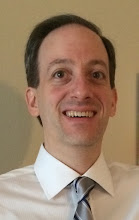
Part III of an Interview with Dr. Charles "Chic" Hess, Author of "Prof Blood and the Wonder Teams"
"Life comes to you in a moment...each moment of your life can be perceived by you only if you are equipped imaginatively, equipped to dramatize your own role in it--to see yourself as a protagonist confronted by adversary circumstances"--Jerzy KosinskiThe greatest basketball coach you've never heard of led Passaic (New Jersey) High School to 159 straight victories from 1919-1925. Ernest Blood--better known as Professor Blood or simply Prof--was an innovator who valued the pass over the dribble and who developed a feeder system in the lower grade levels so that his high school squad had a steady supply of enthusiastic, top level talent. Blood won seven state championships at Passaic from 1915-1925 and he could have enjoyed a much longer run of success there but he ran afoul of shortsighted school administrators who were apparently jealous of his popularity. Blood resigned his post at Passaic and then coached at St. Benedict's Preparatory School (in Newark, New Jersey) for 23 seasons, leading them to five prep school state titles. Blood also coached at Clarkson University and the U.S. Military Academy.
Blood was inducted in the Naismith Memorial Basketball Hall of Fame in 1960 but his life story and accomplishments are not widely known. Enter Philadelphia native Dr. Charles "Chic" Hess, a veteran high school and junior college coach who first learned about Blood by reading about the 159 game winning streak in little filler blurbs in the local newspapers. Hess had always wanted to know more about the fantastically successful coach with the eye-catching name, so when he began working on his doctorate in his forties he also started assembling information about Blood's life and times. This turned into a 16 year project that culminated with Hess writing a 455 page book titled "Prof Blood and the Wonder Teams: The True Story of Basketball's First Great Coach." Published in 2003 and currently available for $29.95 plus $5 shipping and handling, Hess' biography of Blood is truly a labor of love, a thoroughly detailed account of Passaic's epic winning streak and the behind the scenes school politics that ultimately ended Blood's time at the school.
Dr. Hess is a very successful coach in his own right. His 1978 Lebanon (Pennsylvania) high school squad, anchored by future NBA first round draft pick Sam Bowie, made it to the 1978 Class AAA State Finals. Hess won three coach of the year awards in Pennsylvania, captured two NAIA District 29 Coach of the Year awards for his work at Brigham Young University-Hawaii and then earned the 1991 NABC Coach of the Year Award at Arizona Western College (NJCAA).
You can read Part I of my interview with Dr. Hess here, while Part II can be found here.
Friedman: "What stands out the most from your coaching career?"
Hess: "I remember an eighth grade coach telling me that I was capable of being a very good player. I was just a skinny little squirt in the eighth grade but I remember him having confidence in me. I remember being touched by a coach in a way that inspired me that I could be good at this game. I’m sure that he never gave it a second thought but it stuck with me and I often see kids (former players) who I inspired—I get emails from them all the time. Little did I know that I was inspiring them; I was just talking to them because I thought that they could be good and then I would show them some things to help make them better. They would keep coming back because they could learn.
In high school, I got cut in my junior year because a new coach came in and I was a badass. I was a street kid badass: give me some s--- and I would punch you, you know? He got rid of a potential problem but he cut someone who he just misjudged my real heart and love for the game. The following year, I came back and started; I came back as a senior in high school and started for the same coach who cut me the year before. He realized that I was a good player and he gave me a chance. Later, he often talked about the kid he cut who came back and became a starter and a good player for him. I remember that. Meeting Howie Landa—we went to the national junior college tournament and we won a lot of games and he was a basketball crazy guy. He is a one in a million coach. That is how outstanding this man is and how he could motivate you to want to be good and to love to play. He’s a Philadelphia boy, a Philadelphia city kid. He inspired me and taught me a great deal. We went to play in the national tournament in Hutchinson, Kansas. Then, 25 or 30 years later I took a team to Hutchinson and almost won the national title. We lost the championship game. Those types of memories of being a player and being coached by someone else (really stand out).
Look, I have a doctor’s degree and I’m financially independent now and I do what I want to do and it’s all because of basketball—and he gave me my start. So, what do you do? When a kid thanks me for something I did I say, 'Do it for someone else. Pass it on. It’s your time to pass it on now. It’s been passed on to me and I took advantage of it.' I took advantage of my opportunity and I have a doctor’s degree and obviously there is a little bit of prestige that goes along with being older and having a doctor’s degree. That commands a little bit of respect and it is because I had an opportunity given to me by a coach. What am I supposed to do with this? I’m supposed to pass it on. Help someone else; that is what we are here for. There are no secrets; don’t be stingy about what you know about the game. Share it. We’re all in this together. Share it. Pass it on. It’s for all of us."
Friedman: "You said that Howie Landa basically discovered you playing a pickup game on the playground. Have you ever wondered what might have happened if you had left that court five minutes before he showed up or if he had not been there that day? Do you feel like if you had not met him something else would have happened for you anyway and you would have ended up in a similar place? Or do you think that was really a watershed moment in your life, that if you had not met him your life would have turned out a lot differently?"
Hess: "The road to where I am today would have been entirely different. I don’t know if I would have ever gotten into college. I was lost. I was a kid who just lived to play basketball every day and didn’t give a crap about anything else. I hear about black kids in the inner city who have no direction in their lives at all and the adjustments that they have to make to go to college: I went through that. I was lost when I got to college. I learned nothing in high school academically and it was totally my fault. I thought that I was cool. Books meant nothing to me. I didn’t take any books home. I didn’t do any homework. I was a smartass, cocky and going nowhere. I found out that was a dead end. If that man had not been there to put an arm around me, point me in a different direction, I fear for what would have happened."
Friedman: "You coached Sam Bowie when he was in high school. Obviously, he went on to be a very successful college player and a high NBA draft pick who actually was not as bad an NBA player as some people say before he was struck down by the injuries. What was it like to coach Sam Bowie? What kind of player was he in high school?"
Hess: "I just saw Sammy three weeks ago. We spent some time together. I thought Sammy could have been the best basketball player who ever played. I thought he had that type of ability. His disadvantage was his environment. He lost his father when he was in the 10th grade and he lived on what you would call the wrong side of town, on the other side of the tracks. He hung out with kids who were going nowhere, some of whom may be in jail to this day. He had his head in his rear end. I had to get him out of there. During the summer, I would send him up to a camp run by Dave Bing and Howie Landa in the Pocono Mountains. I would send him up there for the summer so that he would have a chance to rub elbows with Dave Bing and Maurice Lucas and many other good black players who were in the NBA. They could see the potential, obviously--he was going to be a big kid, a seven footer. Of course, he looked up to those men and they were good role models for him. He was a typical 16-17 year old who had his head stuck in his butt and who looked at everything the wrong way. He couldn’t really make a good decision about choices to stay out of trouble; that was my job and three weeks ago I put my finger in his chest and I told him, ‘I did those things because I didn’t want you to blow it. It was my job to help you.’ If he didn’t get his 2.0 then he would have had to go to junior college. I went to junior college and I know there is a far difference between Division I and junior college.
There were other seven footers who blew it: Les Cason. That was how Dick Vitale got his start (by recruiting Cason). Of course, I was offered opportunities to go into college (as a package deal with Bowie) to be an assistant coach but there was no way I was going to do that: I can make it on my own. I’m capable; I can chart my own course. Yes, that would have gotten me into Division I and, who knows, with a few breaks I could have become a Division I head coach but God took care of me. I live right by the ocean. I have a beautiful setup here (in Hawaii). I’m home at night. I may go watch the University of Hawaii play Louisiana Tech tonight but after the game is over I drive home and I listen to the wrap up of the game on the radio with my buddies. I’m home in 20 minutes and those guys are still in the locker room and doing all those things. I count my blessings that I have what I have, because I have a good life. My children are grown up and I like what I have. I wouldn’t trade it. I wouldn’t want to be a Division I coach right now. I wouldn’t mind doing a little high school coaching right nearby where I can teach and get satisfaction.
So, anyway, Sammy did not appreciate it right at that time but when he went to Kentucky he came home at Easter and he latched on to me as I did all of my teaching and he followed me around all day and he told me, ‘Coach, everything you told me was true.’ He admitted that he had been a pain in the ass and I said, ‘Yes, Sammy, but I was no prize either when I was a kid.’ I was in trouble. I was a juvenile delinquent. I was on probation. I was just a bad ass kid."
Friedman: "So you saw something of yourself in him?"
Hess: "I knew what it was like. We were certainly different, him being seven feet tall and me being six feet tall, him being black and me being white—"
Friedman: "No, not those things but I mean in terms of being that age and making poor choices."
Hess: "Yeah. I’ve worked with a number of kids who were screwballs. You wondered what the hell was going through their heads. One of them called me up two days ago. Three times he called me up. This kid’s making $100,000 a year and after his next promotion he’ll be a warden at a prison. He said to me, 'I owe it all to you. People thought that I was going to wind up in jail but here I am making this outstanding money working at a jail.' He was in tears by the third phone call and he said, 'I don’t know if I can make it clear to you how much I appreciate what you did for me. No one else would have put up with me. No one else understood me but you took time and worked with me.' I think that maybe because I was one of eight kids and I was a screwball myself that maybe I have a little bit more patience with kids who have some heart and have a love for this game: let’s use this game to help you get somewhere. I haven’t touched the rim in about 15 years but no one cares that I can’t dunk a basketball; what you learn from playing basketball is what is going to be important. There will come a day when you are not even able to play anymore. I doubt if Oscar Robertson can still dunk a basketball. It’s what you’ve learned and what you’ve gotten out of this game (that matters) and if you don’t take advantage of it then you’ve wasted it. I don’t want kids to waste it. If you are going to put time into playing this game then make sure you get something out of it and what you get out of it is directly proportional to what you put into it."
Friedman: "The way that Coach Landa found you and put you on the right path, you responded by doing the same thing for the players you came across during your coaching career."
Hess: "I’m not wealthy but I’m independently satisfied with what I have and I’m fine. I don’t need any more than that, so whatever I can do to help someone else, that’s my pay. That’s my reward. That’s the way it always was in coaching and that’s the way it is right now. I still get asked to go help teach kids how to shoot. Last week I was at a playground here in Hawaii teaching a bunch of eighth graders how to shoot. I’m passing it on. That’s why I had to write Prof Blood’s story. I knew the story of Prof Blood, no one else knew it and I had to make it available. It became my responsibility. That may sound corny."
Friedman: "No, it doesn’t. Not at all."
Hess: "It became my responsibility to share this story with the basketball community. I told these little kids you don’t have to do what I am saying—some of them wanted to keep shooting the ball their own quirky ways—but those of you who want to learn how to shoot, I have something for you. One kid I couldn’t help at all. He shot the ball perfectly."
Epilogue
"Eat the banana now"--Al McGuire
"Go down as you live"--"Super" John Williamson's motto, imploring his teammates to not let pressure-packed game situations alter their mindset or their approach; Hall of Fame Coach Phil Jackson, who was a teammate of Williamson's, has adopted that as a mantra that he often shares with his players
Generally, I keep my own personal business separate from my interviews but because of some things that I am currently going through I was really struck deeply by Dr. Hess' comments about the way that Howie Landa completely changed his life by simply believing in him and giving him a chance to succeed. Those thoughts were foremost in my mind as the interview drew to a close and that led to this exchange:
Friedman: "I appreciate very much the time you have taken for this very interesting interview. I enjoyed reading the book and as I read it, I made analogies and comparisons with aspects of basketball history and strategy that I know more about and I thought about how Prof Blood might coach if he were alive today. It was interesting to get your feedback about that."
Hess: "Thank you very much. As you know, when I first contacted you because of what you have at your fingertips, I asked if you could get some exposure for Prof Blood, because I think that it would make a good movie. I didn’t write the book for money. If a movie were made out of it I’d probably make some money but that is not my motive."
Friedman: "Right. I have no Hollywood contacts. I can tell you that right off the bat, so I don’t think that I can have anything to do with it becoming a movie but I can publicize the story and get our very interesting interview out there. I am always interested in analyzing things and looking at things in depth and the readership that I have is also interested in thinking about basketball that way, so I think that my readers will be interested in this kind of discussion, this comparison of Prof Blood to modern coaches and all of the issues that we talked about. From that standpoint, if I have a reader who has those kinds of connections then you never know what might happen. Howie Landa found you on a playground and look what happened."
Hess: "We need people like you who will analyze something and put a slant on something and inform people."
Friedman: "To be honest, I’m still looking for my Howie Landa, I’m looking for the person who can help me get to the next level in my writing career and get it to the point that it is a lot more financially stable than it is right now. I can relate to the story that you talked about and that is why I asked you the question about where you would have ended up if you had not met Howie Landa. You’d still be the same person on the inside: the same potential, the same talent would still be latent there but if there is not the right person there at the right time to bring all of that out then what kind of result happens? That is a question that interests me not only relating to you but also relating to a lot of other situations as well."
Hess: "Coaches are powerful people. We touch kids in ways that parents and other teachers can’t reach them. It’s a powerful tool. It’s something that should not be taken lightly."
Dr. Hess and I talked a little bit more about 20 Second Timeout and my efforts to expand my readership and he concluded, "You have time. It’s time for something to happen but you have time. Keep writing."
I replied, "Well, whenever someone says that, it reminds me of a story about Michael Jordan. One year with Michael Jordan and the Bulls, they had a painful loss to the Pistons in the playoffs and he was literally on the bus crying, wondering if he ever was going to win a championship. His father said to him to not worry, that he has time, that the team is improving. Jordan just looked at him and said, 'We might not have as much time as you think we do.' That is a really poignant statement if you think about what happened afterward; in one sense, his father was right because a year or two after that the Bulls won the championship but in another sense think about what happened just a few years later: Jordan’s father was shot and killed on the highway. So, on one hand, Jordan’s father was right in that Jordan had a lot of time left and he ended up playing about 10 more years—if you count his comebacks—and he won six championships but on the other hand he only had about four years left with his father. So, if you think about that statement, 'You’ve got time left,' it was true and it wasn’t true, depending on how you look at it."
Hess: "Remember what Al McGuire used to say? Eat the banana now."
Friedman: "McGuire had that approach. I remember that sometimes his team would be scheduled to have a practice and they’d get on the bus and they would go somewhere else, go to a museum or something; sometimes you just have to live for the moment.
Phil Jackson did something like that once after the Bulls had a painful loss in the playoffs. Everyone thought that they were going to practice for three hours but he took them to tour the Statue of Liberty or something. He said that his players needed to get away from the court and not think about all of the bad things that had happened—just do something else together as a group because nothing productive was going to happen in practice that day. That was his pulse of the team at the moment."
In the end, all anyone can do is, as McGuire put it, "eat the banana now"--savor whatever is good in your life at the moment, because you don't know what tomorrow will bring: you can go from being a "playground bum" to being a successful coach/published author or you can win 159 straight games and yet be forced out of your job due to small minded people who harbor petty jealousies. What ultimately matters is that you "go down as you live": Prof Blood never wavered from his principles despite the slings and arrows he suffered at the hands of fools and Dr. Hess worked on his "game"--in the classroom and on the court--until he became a successful coach in his own right and thus had the platform and opportunity to tell Prof Blood's story to the world.
Labels: "Super" John Williamson, Al McGuire, Dr. Charles "Chic" Hess, Howie Landa, Michael Jordan, Passaic High School, Phil Jackson, Prof Blood, Sam Bowie
posted by David Friedman @ 3:10 AM