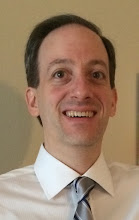
Charley Rosen: Basketball Bard
Charley Rosen, author of more than two dozen books and confidant to Hall of Fame basketball coach Phil Jackson, passed away on September 13 at the age of 84. Last year, Rosen was inducted in the New York City Basketball Hall of Fame. Few people embodied the essence of being a basketball lifer more than Rosen. The 6-8 Rosen earned team MVP honors in each of his three seasons at Hunter College (1959-62) while setting school records for scoring and rebounding. In 1961, he played on the gold-medal winning U.S. squad in the Maccabiah Games, along with future pros Larry Brown and Art Heyman. Rosen never played in the NBA or ABA, but he spent some time with the Scranton Miners of the Eastern Basketball League (EBL) before teaching English at Hofstra.
Rosen wrote many articles for a variety of magazines, including "Dr. J Makes the Whole World Feel Good" for the March 1973 issue of Sport, which was then edited by the incomparable Dick Schaap. Rosen had high praise for Julius Erving, who was in the middle of his second pro season: "By the time he finishes his career, the people who care about basketball history may look back and say there were two doctors who shaped the sport. The first was Dr. James Naismith--and all he did was invent the game. Dr. J made it an art."
In 1975, Rosen published his first book, Maverick, which he co-wrote with Jackson, who then played for the New York Knicks. Stan Love, who played five NBA/ABA seasons with the Baltimore Bullets, L.A. Lakers, and San Antonio Spurs, introduced his friend Rosen to Jackson, and the rest is basketball (and writing) history. Stan Love, who passed away on April 27, 2025, is the father of current NBA player Kevin Love, and the younger brother of Beach Boys singer Mike Love.
In 1979-80, Rosen coached the men's team at Bard College; he described his experiences at Bard in his book Players and Pretenders. Rosen served as Phil Jackson's assistant with the CBA's Albany Patroons from 1983-86 before becoming a CBA head coach with Albany, Rockford, Oklahoma City, and Savannah. Rosen's experiences in the CBA formed the basis of his hilarious 1992 novel The Cockroach Basketball League. Rosen coached the SUNY New Paltz women's team from 1993-95, and subsequently became a regular contributor to a variety of websites, including ESPN.com, FoxSports.com, and HoopsHype.com. For the past 30 years or so, he typically produced a new book every other year.
Rosen was an engaging storyteller in addition to being a shrewd observer of basketball strategy and tactics. Overall, I found his work to be entertaining and informative, but it must be noted that Rosen could be sloppy with his research, and some of his writing contains egregious errors. I won't give him a pass in life or death for errors that are inexcusable, but I will say that I generally found his skill set analysis of players and teams to be on target. For example, Rosen understood that Kobe Bryant was better than Dwyane Wade at a time when many media members who were biased in favor of Shaquille O'Neal--and thus against O'Neal's former teammate Bryant--could not bring themselves to acknowledge Bryant's greatness. Rosen also displayed an astute understanding of the differences between NBA basketball and FIBA basketball, and he explained why statistics can be very misleading. It is popular in many quarters to assert that college basketball is somehow a purer or more fundamentally sound form of basketball than NBA basketball, but Rosen cut through that nonsense nearly two decades ago with words that are still relevant today: "The NBA game has a huge advantage in player talent, offensive and defensive prowess, coaching, officiating and the overall quality of performance in every aspect but one. The only advantage the college game enjoys is the consistent enthusiasm of its players. And this is true only because some veteran NBA players on basement-dwelling teams will take an occasional game off late in the season. The worst NBA team would trounce the NCAA champs by upwards of 30 points."
Rosen's death caused me to think back to my formative years as a basketball fan. I have enjoyed watching, playing, reading about, and writing about basketball since I was a very young child. Basketball is a lifelong passion for me just as it was for Rosen. Basketball books that I read before the age of 15 that significantly impacted and influenced me include Basketball's Biggest Stars by Angelo Resciniti, many editions of The Complete Handbook of Pro Basketball edited by Zander Hollander, A Loose Game by Lewis Cole, The Breaks of the Game by David Halberstam, Daniel Rudman's 1980 anthology Take it to the Hoop, Stuff Good Players Should Know by Dick DeVenzio, The Legend of Dr. J by Marty Bell, and The Lonely Heroes by Merv Harris--but that list would not be complete without Rosen's God, Man and Basketball Jones, a book that crackles with memorable phrases and keen insights; it was published in 1979, and I read it from cover to cover some time in the early 1980s when I was 10 or 11. An important concept from that book that stuck with me ever since is that you cannot fully understand what is happening in a basketball game if you are only watching the ball, because there are nine players who do not have the ball whose movements (or lack of movement) are significant. A funny line from that book that still makes me chuckle is Rosen's description of Elvin Hayes after delineating the different ways that various forwards play and after noting Hayes' propensity to shoot fadeaway jumpers: "If there are small forwards, power forwards, defensive forwards, and penetrating forwards, then Elvin Hayes is the only backwards-forward in the NBA."
At the end of the first chapter of God, Man, and Basketball Jones, Rosen waxed poetic about his love for basketball:
Basketball is one-on-one and burn-on-burn.
Basketball is ballet with defense.
Basketball is a blur of acrobatic giants, perilous abandon, and ram-slam-in-your-mother's-eyes dunk shots.
And for even the most casual fan, basketball can also be a dribbling, leaping, flowing salvation.
He concluded the book with this thought: "He who lives by the jump shot dies. But a true vision of Basketball Jones releases the selfless energy that sustains the game, sustains life, and brings them both to victory."
If heaven is a playground--to borrow the title of Rick Telander's classic 1976 book about basketball in New York City that I read a few years after my first exposure to Rosen's work--then Rosen is hooping now without having to worry about bad knees or bad calls, and he is enjoying the full glory of the selfless energy of Basketball Jones.
Labels: Angelo Reciniti, Basketball Jones, CBA, Charley Rosen, David Halberstam, Dick DeVenzio, Julius Erving, Kobe Bryant, Lewis Cole, Marty Bell, Merv Harris, Phil Jackson
posted by David Friedman @ 4:05 AM